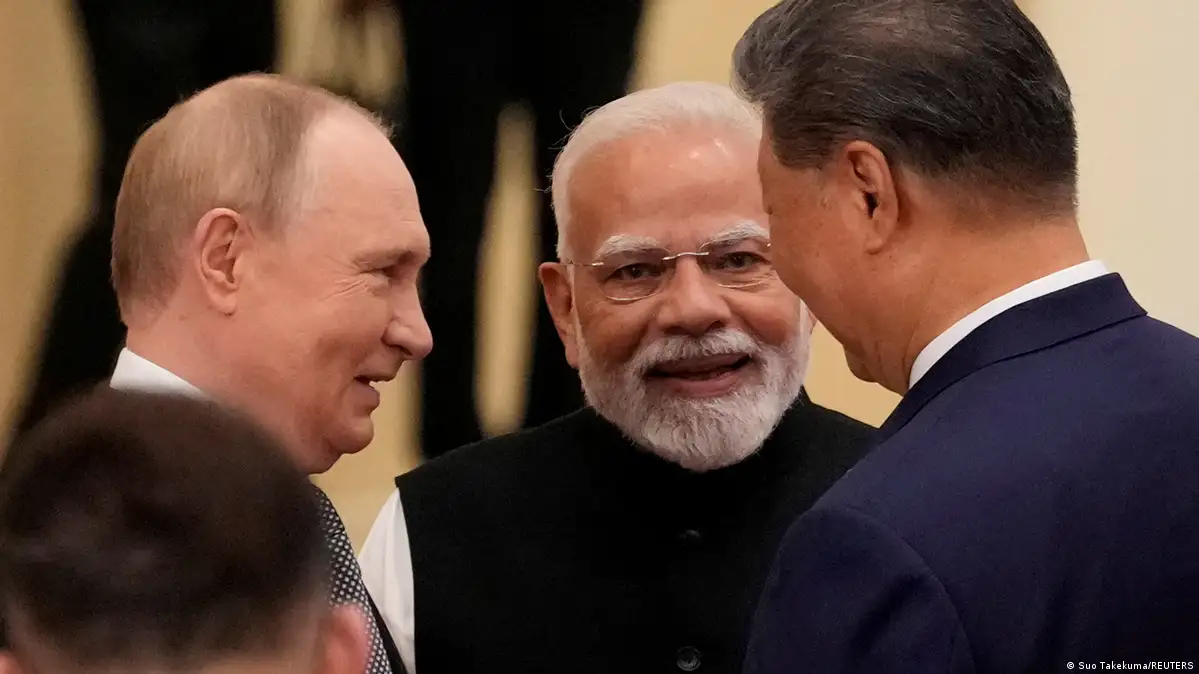
习近平抵达新德里出席金砖峰会并会见多国领导人Xi Arrives in New Delhi for BRICS Summit and Talks
中国国家主席习近平于2026年9月12日早晨抵达新德里,出席由印度总理莫迪主持的第18届金砖国家峰会。这是习近平自2019年以来首次访问印度,俄罗斯总统普京与伊朗总统佩泽希齐扬等多国领导人也齐聚新德里参加为期两天的会议。新德里当局为此部署了约3万名安全人员并实施交通管制。为期两天的峰会重点讨论经贸投资、能源安全、供应链稳定、非西方跨境支付渠道、推进本币结算以减少对美元的依赖,以及人工智能合作和全球治理机构改革。各方磋商正值中东和乌克兰两场战事持续扰动全球航运与能源市场、美国关税政策对多国构成贸易压力的时期。由11个成员国组成的金砖机制在寻求扩大发展中国家话语权的同时,也面临着成员国在地区冲突和双边关系上的内部协调考量。
Chinese President Xi Jinping arrived in New Delhi on the morning of September 12, 2026, to attend the 18th BRICS Summit hosted by Indian Prime Minister Narendra Modi, marking Xi's first visit to India since 2019. Russian President Vladimir Putin, Iranian President Masoud Pezeshkian, and leaders from other member states gathered in the Indian capital for the two-day summit, where authorities deployed about 30,000 additional security personnel and imposed traffic restrictions. The meeting's agenda centers on economic cooperation, trade and investment, energy security, supply chain resilience, non-Western cross-border payment mechanisms, reducing reliance on the U.S. dollar through local currency settlement, artificial intelligence cooperation, and reforms to global governance institutions. The talks open as ongoing conflicts in Ukraine and the Middle East disrupt shipping and energy markets, while U.S. tariff measures exert trade pressures across multiple economies. As the 11-member bloc seeks greater representation for emerging and developing nations, it also navigates internal differences among member states regarding regional conflicts and bilateral ties.

01习近平抵达新德里与中印高层接触Xi's Arrival in New Delhi and High-Level China-India Engagement
中国国家主席习近平应印度总理莫迪邀请前往新德里出席金砖峰会,中国官方新华社报道称其随行代表团成员包括中共高级别官员蔡奇和外交部长王毅。这是习近平自2019年以来时隔七年首次踏上印度领土,两国此前因2020年喜马拉雅边界发生致命冲突导致双边关系陷入长期紧张。
Chinese President Xi Jinping traveled to New Delhi for the BRICS summit at the invitation of Indian Prime Minister Narendra Modi, with Chinese state media Xinhua reporting that his delegation includes high-ranking Chinese Communist Party official Cai Qi and Foreign Minister Wang Yi. The visit marks Xi's first trip to India in seven years since 2019, following a prolonged diplomatic freeze sparked by deadly military clashes along the disputed Himalayan border in 2020.
近期中印两国通过恢复客运航班、签证审批以及重启高层交往推动双边关系谨慎解冻。尽管双方在喜马拉雅争议边界现状、印度对华巨额贸易逆差以及跨亚洲区域的战略竞争方面仍存分歧,但华盛顿实施的关税政策与经济施压正促使双方在多边框架下寻求务实接触。
Bilateral relations between the two Asian powers have shown signs of a cautious thaw as both governments move to restore commercial flights, visa processing, and regular high-level contacts. While friction persists over outstanding border disputes, India's substantial trade deficit with Beijing, and broader strategic rivalry across Asia, trade tariffs and economic measures from Washington have added another incentive for both sides to manage tensions and engage through multilateral channels.
02扩员后金砖峰会开幕与领导人阵容Opening of Expanded BRICS Summit and Gathering of Leaders
印度总理莫迪在新德里主持召开第18届金砖国家峰会,这是印度第四次担任金砖国家峰会轮值主席国。参会阵容除中国国家主席习近平、俄罗斯总统普京和伊朗总统佩泽希齐扬外,还包括埃及总统塞西、埃塞俄比亚总理阿比以及印度尼西亚总统普拉博沃。阿联酋由阿布扎比王储代表出席,创始成员国巴西则由外交部长维埃拉代表总统卢拉参会。此外,联合国秘书长古特雷斯、世界卫生组织及世界贸易组织主要负责人也抵达新德里出席会议。
Indian Prime Minister Narendra Modi opened the 18th annual BRICS Summit in New Delhi, marking the fourth time India has hosted the gathering. Alongside Chinese President Xi Jinping, Russian President Vladimir Putin, and Iranian President Masoud Pezeshkian, the expanded summit roster includes Egyptian President Abdel Fattah el-Sisi, Ethiopian Prime Minister Abiy Ahmed, and Indonesian President Prabowo Subianto. The United Arab Emirates was represented by the Crown Prince of Abu Dhabi, while founding member Brazil sent Foreign Minister Mauro Vieira to represent President Luiz Inacio Lula da Silva. United Nations Secretary-General Antonio Guterres and the heads of the World Health Organization and the World Trade Organization also attended.
峰会召开前夕,莫迪已在周五分别与先行抵达的普京和佩泽希齐扬举行双边会晤,其中与佩泽希齐扬讨论了航行自由与船员安全等议题。新德里市区街道布置了金砖主题标志并对建筑物实施照明亮化,数千名警察和准军事人员沿会场与政要下榻酒店周边展开严密巡逻,实施多路段交通封锁与分流,保障十余位国际政要的与会安全。
Ahead of the main sessions, Modi held early bilateral discussions on Friday with Putin to deepen bilateral ties, and met with Pezeshkian to raise issues concerning freedom of navigation and ship crew safety. The host city was decorated with summit signage and illuminated landmarks, while thousands of police and paramilitary forces set up security perimeters around the venue and delegates' hotels, imposing traffic diversions and road closures across central New Delhi.
我们赞成维护自身利益。
We are in favor of our interests.
俄罗斯总统普京在金砖国家工商论坛发表的演讲Russian President Vladimir Putin in a speech at the BRICS Business Forum
03经贸合作、本币结算与机构改革核心议题Core Agenda: Economic Cooperation, Local Currency Payments, and Institutional Reform
金砖国家峰会聚焦经贸合作、能源与粮食安全、技术协作以及供应链稳定。成员国财长与央行行长明确反对扭曲贸易且不符合世界贸易组织规则的关税及非关税措施。面对外部经贸压力与多重制裁,各方积极推动建立非西方跨境支付渠道,探讨在贸易结算与跨境支付中增加使用本国货币,旨在降低对美元的依赖度,并寻求替代西方主导金融机构的合作路径。
Discussions at the summit center on economic cooperation, energy and food security, technology collaboration, and supply chain resilience. Finance ministers and central bank governors across the bloc have voiced objections to tariffs and non-tariff measures, stating that such policies distort trade flows and run counter to World Trade Organization rules. Against external economic pressures and sanctions, member nations are prioritizing the expansion of non-Western cross-border payment channels, encouraging greater use of national currencies in commercial transactions to reduce reliance on the U.S. dollar while developing alternatives to Western-dominated financial institutions.
中国与俄罗斯视该机制为加强新兴与发展中经济体协作、改变西方尤其是美国主导地位的途径。受美国全面制裁与封锁的伊朗则主张建立金融防御机制以抵御外部经济施压。此外,峰会议程涵盖人工智能领域合作,并呼吁对全球治理机构展开改革,以扩大发展中国家在国际多边体系中的话语权与代表性。
China and Russia view the grouping as a framework to strengthen cooperation among emerging and developing economies and counter Western dominance, particularly that of the United States. Iran, facing sweeping sanctions and an ongoing U.S. blockade, has actively pushed for mechanisms designed to shield member economies from outside financial pressure. The agenda also includes cooperation on artificial intelligence and demands for comprehensive reforms of global governance institutions to ensure broader representation and decision-making power for developing countries.
04地缘冲突与外部经贸压力下的内部协调挑战Geopolitical Conflicts, External Pressures, and Internal Alignment Challenges
中东与乌克兰战事持续推升地缘政治风险,同时考验扩员后金砖机制内部的共识凝聚力。美国和以色列针对伊朗的战事使成员国处于不同立场,伊朗与阿联酋在冲突中各持诉求,也门境内沙特阿拉伯同伊朗支持的胡塞武装之间的摩擦持续存在。在去年的峰会上,金砖国家曾发表联合声明谴责美以对伊朗领导层与核设施的轰炸行动,但今年5月举行的金砖国家外长会议未能就该冲突达成联合声明。
Escalating conflicts in the Middle East and Ukraine continue to complicate coordination within the expanded BRICS grouping as member nations navigate competing strategic positions. The military campaign waged by the United States and Israel against Iran places member states on differing sides, with distinct geopolitical stances held by Iran and the United Arab Emirates, alongside ongoing frictions between Saudi Arabia and Iran-backed Houthi forces in Yemen. While the bloc issued a joint declaration last year condemning the 12-day U.S.-Israeli bombing campaign targeting Iranian leadership and nuclear facilities, a meeting of BRICS foreign ministers in May 2026 concluded without reaching a joint statement on the conflict.
除中东分歧外,华盛顿对多个成员国施加关税并推行贸易保护措施,促使各国在寻求避险的同时调整外交平衡。印度长期奉行战略自主政策,在与美日澳开展四方安全对话合作的同时,维持与俄罗斯和伊朗的经贸往来并推动对华接触。分析人士指出,面对外部经贸压力与地缘争端,各成员国在平衡双边战略分歧与维持多边协作之间面临持续的协调考验。
Beyond Middle Eastern divisions, trade tariffs and economic measures imposed by Washington have prompted member economies to hedge their international partnerships while managing external pressures. India continues to pursue strategic autonomy, deepening security cooperation through the Quad alongside the United States, Japan, and Australia while maintaining long-standing ties with Russia and Iran and pursuing cautious re-engagement with China. Analysts observe that divergent national priorities and regional disputes pose ongoing tests for the bloc's capacity to maintain unified positions on major global crises.