俄罗斯空袭基辅第聂伯河北桥 跨河交通严重受阻Russia Strikes Kyiv's Northern Bridge, Halting Cross-River Traffic
2026年10月3日周六早间,俄罗斯空袭了基辅跨越第聂伯河的北桥,造成桥面及无轨电车架空线路受损,导致从左岸前往右岸的交通中断,现场暂无人员伤亡报告。基辅市长克里琴科与乌克兰官方通报显示,应急救援部门已赶赴现场处理。在此次袭击发生前,连接首都东西两岸的南桥已在周四和周五接连遭到俄军多轮无人机打击,导致地铁和汽车通行受阻,迫使基辅国防委员会召开危机应对会议。俄罗斯国防部随后发表声明,确认袭击了该桥梁并指称其用于军事部队调动和后勤,同时表示打击了市内的一处物流中心。基辅市长克里琴科警告称,首都目前处于极为严峻的局势之中,俄方正持续打击桥梁、交通和能源等关键基础设施,试图瘫痪整座城市的日常运转并迫使居民离开首都。
A Russian air strike struck the Northern Bridge across the Dnipro River in Kyiv on the morning of Saturday, October 3, 2026, damaging the road surface and overhead trolleybus wires while halting traffic from the left bank to the right bank, with no casualties reported. The incident followed consecutive drone attacks on Thursday and Friday against the Southern Bridge, which had already suspended metro and vehicle services and prompted Kyiv's defence council to hold a crisis meeting. Russia's Defence Ministry confirmed it hit the bridge, stating the crossing was used for military troop transfers and logistics, while adding that it also targeted a city logistics centre. Ukrainian President Volodymyr Zelenskyy and Kyiv Mayor Vitali Klitschko warned that the capital is facing a very dramatic situation, arguing that the strikes are designed to destroy critical crossings, transport links, and municipal infrastructure to force residents to flee the city.
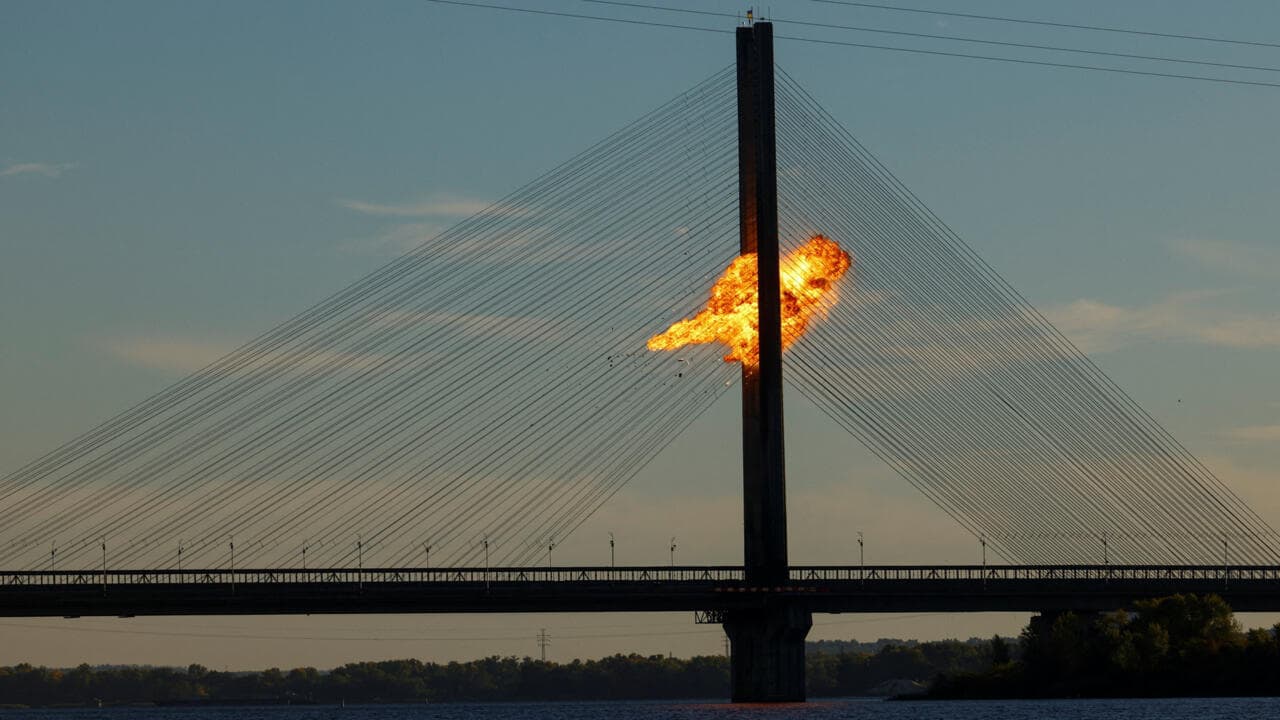
01北桥遇袭导致跨河交通受阻Northern Bridge Hit and Cross-River Traffic Halted
周六上午基辅防空警报拉响后,针对第聂伯河上北桥(Pivnichnyi Bridge)的空袭随即发生。根据基辅市长克里琴科在社交媒体 Telegram 发布的现场通报,袭击造成桥面路体和无轨电车架空线路明显破损,导致从左岸前往右岸的车辆通行陷入瘫痪,多路应急救援人员在袭击后迅速赶赴受损现场展开处置。
The air attack on the Northern (Pivnichnyi) Bridge occurred on Saturday morning shortly after a drone alert sounded across Kyiv. According to operational updates published by Kyiv Mayor Vitali Klitschko on Telegram, the strike damaged the road surface along with overhead trolleybus electrical wires, halting vehicle traffic heading from the left bank over to the right bank as emergency rescue teams were dispatched directly to the scene.
当地官方随后发布的最新通报确认,北桥的这起空袭事件中暂无人员伤亡报告。作为连接基辅市区东西两岸的八座主要跨河桥梁之一,北桥在周六清晨承载着大量民用通勤需求,受损车道封闭使得大批原本依赖该通道前往市中心的公交线路和私家车流被迫转向其他过河路段。
Municipal authorities subsequently confirmed that no casualties were reported from the strike on the bridge structure. As one of eight major crossings spanning the Dnipro River to connect the eastern and western halves of the capital, the Northern Bridge handles substantial daily commuter flows, and the resulting closure of its damaged lanes forced public buses and private vehicles to seek alternative routes into the city centre.
02针对第聂伯河通道与市内交通的连续打击Repeated Strikes on Dnipro River Crossings and Urban Transport
在北桥受袭之前,位于基辅南部的南桥(Pivdennyi Bridge)已在周四和周五连续遭到俄军高速喷气动力无人机的多轮袭击。根据基辅市政当局通报,周四的一架无人机直接击中了这座斜拉桥的线缆,随后引发的爆炸冲击波将粉尘灌入地铁车厢的通风系统中。接连打击迫使官方在周五关闭了南桥并限制另一座桥梁通行,导致途经该桥的汽车与跨河地铁运行全面暂停。
Before the Northern Bridge was struck, the Southern (Pivdennyi) Bridge had sustained repeated drone hits throughout Thursday and Friday by fast-moving, jet-powered Russian drones. Municipal reports indicated that a drone struck cables on the cable-stayed structure during Thursday's attack, with train passengers describing blast wave dust entering subway carriages through ventilation systems. The continuous strikes forced authorities to close the Southern Bridge on Friday and restrict traffic on another crossing, suspending both automobile traffic and metro rail services over the river.
第聂伯河将拥有约300万人口的基辅分为东西两岸,市内主要依赖八座跨河通道维系通勤。南桥与北桥相继停运或受阻后,主干道出现大面积汽车与公交车长龙,部分通勤人员被迫弃车徒步跨河前往工作地点。基辅国防委员会在周五召开紧急危机应对会议,市长克里琴科在会后表示,针对跨河交通与关键物流的连环打击已让城市处于战时状态。
The Dnipro River divides Kyiv's population of roughly three million residents between the eastern and western banks, with urban mobility heavily dependent on eight central bridges. Consecutive disruptions on the Southern and Northern bridges generated severe gridlock across major access arteries, leaving buses and private cars immobilized and forcing some commuters to abandon vehicles and cross the river on foot. Kyiv's defence council convened an emergency crisis meeting on Friday, after which Mayor Vitali Klitschko warned that strikes targeting transit and logistics routes require the capital to operate on a war footing.
俄军升级打击基辅跨河桥梁历程Timeline of Russian Strikes on Kyiv Cross-River Bridges
梳理俄军从空袭基辅民用设施升级至连续打击第聂伯河跨河桥梁交通的关键节点。
Traces the escalation of Russian strikes on Kyiv, culminating in attacks on key Dnipro River bridges that disrupted capital transport.
俄军向基辅发动持续近5小时的无人机和巡航导弹袭击,造成至少2人死亡、16人受伤,受损住宅、学校等民用设施达50多处。
Russia launched a nearly five-hour drone and missile assault on Kyiv, killing at least two people, injuring up to 16, and damaging over 50 civilian sites including homes and schools.
俄军喷气式无人机击中基辅第聂伯河南桥缆索,这是该关键通道首次遇袭,爆炸产生的气浪与扬尘灌入过桥的地铁车厢。
A Russian drone struck cables on Kyiv's Southern Bridge across the Dnipro River, marking the first time the crossing was hit and sending blast dust into metro cars.
南桥连续两天遭遇多轮无人机袭击,当局被迫暂停跨河地铁和汽车通行,基辅国防委员会召开紧急会议应对交通危机。
After consecutive drone strikes hit the Southern Bridge, authorities suspended metro and vehicle crossings, prompting Kyiv's defence council to hold an emergency crisis meeting.
俄军空袭基辅第聂伯河北桥,造成路面与无轨电车电网受损并切断单向通行;俄国防部证实空袭,称该桥用于军事调动。
A Russian air strike damaged the road surface and trolleybus wires on Kyiv's Northern Bridge, halting cross-river traffic; Russia said the crossing was used for military transport.
03俄乌双方对桥梁袭击目标的表态与定性Official Claims and Stated Objectives from Russia and Ukraine
针对针对基辅桥梁与市内物流网络的空袭行动,俄罗斯国防部公开发表声明,确认实施了打击,并声称这些桥梁被乌方用于军事部队调动和后勤补给,同时俄军还打击了基辅市内的一处物流中心。俄罗斯总统普京此前曾表示,俄方的打击行动是对乌克兰袭击俄罗斯能源设施的回应。
Addressing the strikes on Kyiv's river crossings and municipal transit routes, the Russian Defence Ministry confirmed it carried out the attack, stating the bridge was targeted because it was being used for military troop transfers and logistical operations, while noting that forces also struck a logistics centre in the capital. Russian President Vladimir Putin previously stated that Russian actions come in response to Ukrainian strikes on Russian energy infrastructure.
乌克兰领导层对此提出强烈谴责。乌克兰总统泽连斯基在接受采访时指出,俄军在未能实现占领后转而实施大规模袭击,意图摧毁桥梁、数据中心、通信网络、医院及学校等民用设施,迫使居民离开首都。基辅市长克里琴科同样指出,敌方正在破坏基辅的城市运转,首都面临十分严峻的局面,市民已无法按照和平时期的状态正常生活。
Ukrainian leaders strongly disputed those claims and condemned the expanded targeting. Ukrainian President Volodymyr Zelenskyy stated in an interview that Russian forces, having failed in their ground occupation objectives, are launching widespread strikes intended to destroy bridges, data centres, mobile networks, schools, and hospitals to force residents to flee urban centres. Kyiv Mayor Vitali Klitschko similarly stated that the sustained destruction of transport, logistics, and housing means the capital faces a very dramatic situation where residents can no longer live under peacetime assumptions.
04防空压力与冬季基础设施面临的威胁Air Defence Pressures and Threats to Winter Infrastructure
基辅当前面临严峻的防空挑战,一方面用于应对弹道导弹的爱国者(Patriot)拦截弹出现严重短缺,另一方面俄军投入了速度更快、更难击落的新一代喷气动力无人机。尽管乌方正加快部署新型拦截无人机,且已有数架投入使用,但国防工业界人士透露,要实现足以保护首都的规模部署仍需数周乃至数月时间。
Kyiv is confronting acute operational pressure on its air defences, driven by a severe shortage of Patriot interceptors for ballistic missiles alongside Russia's deployment of faster, jet-powered drones that prove significantly harder to shoot down. Although Ukrainian defence teams are racing to fast-track new interceptor drones capable of countering these jet-powered models—with several units already active in the field—defence industry sources indicated that reaching an operational scale sufficient to safeguard the capital could still require weeks or months.
与此同时,俄军近期针对热电厂等能源设施展开空袭,导致基辅部分街区断电断水。乌克兰官方与各界普遍认为,俄方在上周启动了针对首都供电网络的冬季轰炸攻势。乌方截获的情报显示俄军计划动用多达1000枚导弹、无人机和炸弹袭击变电站、水电站及锅炉房,意图在寒冬来临之际破坏城市能源供应并制造人道危机。
At the same time, recent Russian strikes against thermal power plants and auxiliary facilities have already cut off electricity and running water in several Kyiv neighbourhoods. Ukrainian officials view these attacks as the opening phase of an expected winter bombing campaign against the municipal power grid. Intercepted Russian operational plans shared with European officials outlined intentions to deploy up to 1,000 missiles, drones, and guided bombs against electrical substations, hydroelectric and thermal plants, and boiler houses to disrupt heating and basic municipal services ahead of winter.