美国最高法院开启新审理期 审理气候诉讼与枪支选民规则大案US Supreme Court Opens New Term With High-Stakes Climate, Gun, and Election Cases
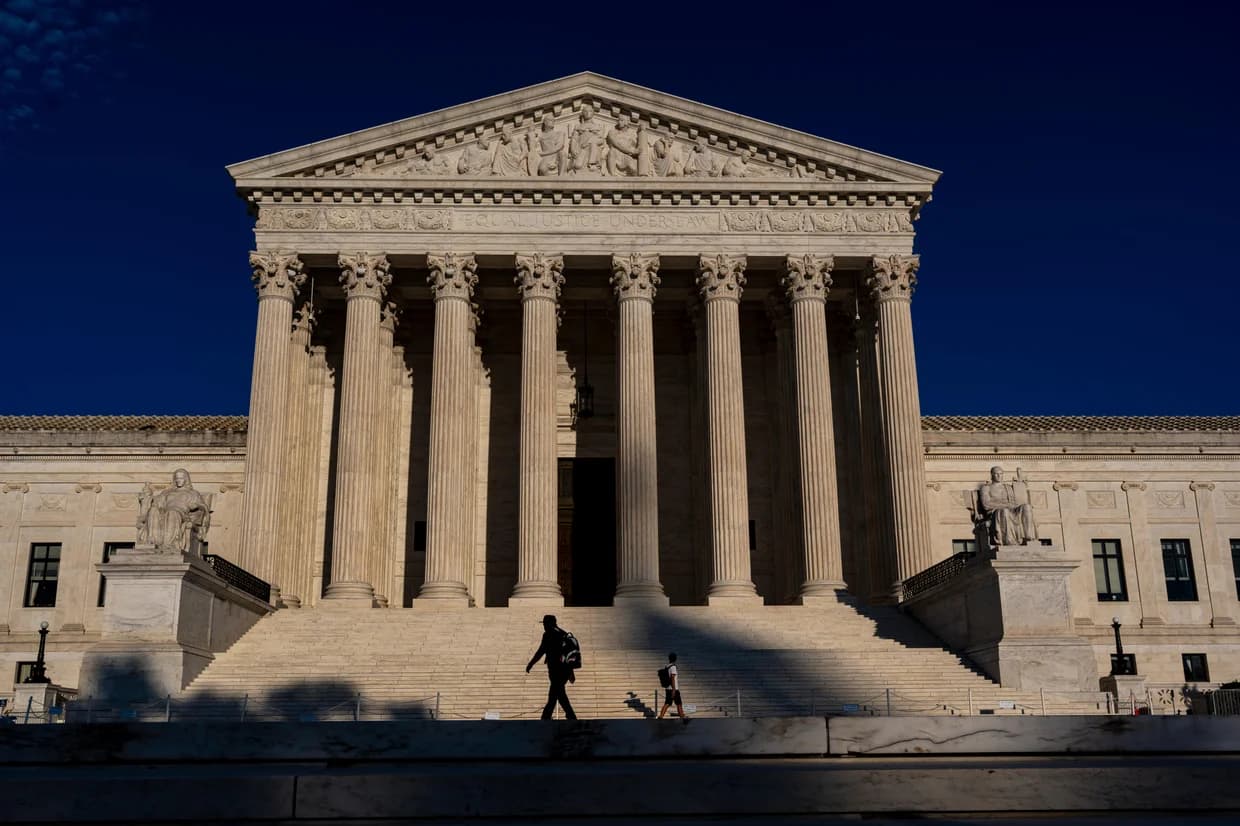
美国最高法院于2026年10月5日(周一)开启新审理期,审理涉及气候损害诉讼、宗教自由、枪支管制及选举规则等多领域的重大宪法案件。首场口头辩论案件为“桑科尔能源诉博尔德县案”(Suncor Energy v. Boulder County),焦点在于科罗拉多州地方政府依据州侵权法要求能源公司承担气候变化损害赔偿的主张,是否受到包括《清洁空气法》在内的联邦法律所阻断。除气候诉讼外,法院还将审理科罗拉多州全民学前教育项目排斥天主教幼儿园资助争议(圣玛丽天主教教区诉罗伊案)、伊利诺伊州与康涅狄格州AR-15半自动步枪禁令合宪性诉讼(Viramontes与Grant案合并审理),以及亚利桑那州要求选民提供公民身份证明文件引发的“共和党全国委员会诉Mi Familia Vota案”。这些案件将重新界定联邦与州政府权力边界及宪法权利适用的具体界限。
The U.S. Supreme Court opens its new term on Monday, October 5, 2026, considering a wide-ranging docket that encompasses climate damage litigation, religious freedom, gun control, and voter registration rules. The term begins with oral arguments in Suncor Energy v. Boulder County, where justices will evaluate whether federal law, including the Clean Air Act, preempts Colorado local governments from seeking climate-related damages from energy companies under state tort law. Beyond climate litigation, the court is scheduled to review disputes over state versus federal authority and constitutional protections. These include St. Mary Catholic Parish v. Roy, addressing Colorado's exclusion of Catholic preschools from universal preschool funding; consolidated challenges to AR-15 assault weapon bans in Illinois and Connecticut in Viramontes v. Cook County and Grant v. Higgins under the Second Amendment; and Republican National Committee v. Mi Familia Vota, focusing on Arizona laws requiring documentary proof of citizenship for voter registration. The forthcoming rulings are set to delineate key legal boundaries surrounding federal preemption and individual constitutional rights.
01新审理期开启:多领域重大宪法诉讼登场Supreme Court Term Opens: Broad Docket on Federalism and Individual Rights
美国最高法院周一开庭标志着司法审理焦点的转向。在上一个审理期中,大法官们集中处理了多起涉及总统职权的案件,包括限制出生公民权、加征关税以及解雇独立机构官员等行政权力争议。相比之下,本审理期已经接受审理的案件呈现出分散化的特征,重点转向审查州与联邦法律的优先效力、跨州管辖权界限以及个人宪法权利的保障。
The start of the Supreme Court's term on Monday shifts judicial scrutiny away from debates over executive authority that defined the previous term. While justices previously addressed disputes concerning presidential power to limit birthright citizenship, impose tariffs, and remove independent agency officials, the incoming term spans a diverse array of marquee constitutional questions touching on federalism, cross-border jurisdiction, and individual protections.
司法危机网络(JCN)总裁卡丽·塞韦里诺表示,本审理期的案件涵盖宗教自由以及涉及州与联邦优先管辖权的多起争议,很难用单一主题概括。由于大法官们仅确定了部分审理日程,后续还将批准更多案件的调卷令,本届任期将继续在宪法原意主义解释框架下,检验州政府在枪支管制、气候侵权索赔及选民身份验证等领域能够行使权力的具体法定限度。
Carrie Severino, president of the Judicial Crisis Network, observed that the docket includes multiple religious liberty disputes alongside state and federal preemption claims, noting that the diverse cases lack a single uniform theme. With justices having filled only a portion of their argument calendar and additional certiorari grants expected, the court's originalist majority will evaluate the statutory boundaries of state power across firearms regulation, climate tort liability, and voter registration integrity rules.
02气候诉讼交锋:地方侵权索赔与联邦管辖权界限Climate Litigation Clash: Local Tort Claims and Federal Preemption
在周一的首场口头辩论中,最高法院审理了桑科尔能源诉博尔德县案(Suncor Energy v. Boulder County)。科罗拉多州博尔德县依据该州侵权法起诉桑科尔能源与埃克森美孚等石油巨头,就全球气候变化造成的损害寻求巨额赔偿。博尔德县法律团队的外部法律顾问曾公开表示,此类气候诉讼实际上相当于征收“碳税”,并承认该举措可能推高化石燃料价格,甚至可能将能源公司推向破产边缘。全美已有数十个州和城市提起类似诉讼,试图通过州级法院追究排放责任。
In the term's opening oral argument, the Supreme Court took up Suncor Energy v. Boulder County, where local officials in Colorado are suing oil companies including Suncor Energy and ExxonMobil under state tort law to seek substantial damages for the impacts of global climate change. An outside counsel for Boulder's legal team has publicly described such climate litigation as effectively imposing a carbon tax, acknowledging that these efforts could raise fossil fuel prices and potentially push energy companies toward insolvency. Dozens of states and municipalities across the country have pursued similar lawsuits in local courts targeting greenhouse gas emissions.
两家能源公司在答辩中主张,《清洁空气法》明确将跨州和国际碳排放的管辖权授予联邦政府,科罗拉多州无权追究其在州外的经营排放行为;而该州则坚称自身系根据州法律索赔,《清洁空气法》保留了各州执行本地法律的权力。美国企业研究所高级研究员亚当·怀特在联邦党人学会讨论中指出,若博尔德县的主张获胜,不仅会迫使企业调整在当地的运营,更将实质性影响其在科罗拉多州境外的广泛业务。最高法院将重点裁定联邦法律是否阻断此类地方侵权诉讼,以及法院是否具备审理该案的法定管辖权。
The energy companies argue that the federal Clean Air Act assigns authority over interstate and international emissions exclusively to the federal government, preventing Colorado courts from penalizing out-of-state conduct. In response, local officials assert that the Clean Air Act preserves states' rights to enforce state-level tort remedies. Adam White, a senior fellow at the American Enterprise Institute, observed during a Federalist Society panel that a ruling favoring Colorado would not merely alter local practices but would allow state courts to effectively regulate corporate operations nationwide. The justices are evaluating whether federal law preempts these municipal climate lawsuits and whether the high court maintains statutory jurisdiction over the dispute.
03宗教自由与反歧视规则:天主教幼儿园资助争议Religious Liberty and Nondiscrimination: Catholic Preschool Funding
在“圣玛丽天主教教区诉罗伊案”(St. Mary Catholic Parish v. Roy)中,最高法院将审理科罗拉多州全民学前教育计划引发的宗教自由争议。该州向参与该项目的私立幼儿园提供公共资金支持,但要求接收资助的机构遵守涵盖性取向和性别认同的州反歧视规定。天主教幼儿园因坚持天主教关于性别和婚姻的教义,制定了限制同性伴侣及LGBT学生入学的政策,并反对允许学生依据性别认同使用异性卫生间,因而被排除在州资助项目之外。涉案学校主张,强制其放弃宗教教义政策才能获得其他私立学校享有的公共资助构成了违宪限制。
In St. Mary Catholic Parish v. Roy, the Supreme Court is set to review a First Amendment clash arising from Colorado's universal preschool funding program. Colorado extends public subsidies to participating private preschools on the condition that they comply with state nondiscrimination mandates covering sexual orientation and gender identity. Catholic preschools were shut out of the funding program due to adherence to Church teachings on sex and marriage, which include policies regarding same-sex couples and LGBT students, as well as rules prohibiting students from using opposite-sex bathrooms. The Catholic schools argue that forcing them to compromise their religious beliefs to access generally available state funding violates constitutional protections.
此案再次引发关于第一修正案宗教条款与民权保护边界的司法争论。天主教学校指出,该州计划主管在证词中承认参与学校可为特定性别群体申请优待,却排斥宗教团体,构成了差别待遇;支持者同时援引最高法院自2017年以来在涉及密苏里州、蒙大拿州和缅因州判例中确立的原则,即政府不得因宗教性质将信仰团体排除在普遍适用的公共福利之外。但曾代理同性伴侣权益诉讼的律师阿曼达·沙诺尔在联邦党人学会讨论中提出不同观点,认为扩大机构以身份为由拒绝服务的范围,可能会削弱既有的反歧视法律保护。
The dispute highlights deep legal divisions between religious free exercise rights and civil rights nondiscrimination rules. The Catholic preschools highlight testimony from the state program director showing that secular preferences could be accommodated while religious policies were barred. Proponents of the religious schools point to high court precedents since 2017 spanning cases in Missouri, Montana, and Maine, which established that governments cannot exclude faith-based groups from generally applicable public benefits solely due to their religious identity. Conversely, civil rights attorney Amanda Shanor noted during a Federalist Society panel that expanding exemptions for institutions to refuse service based on identity could chip away at longstanding anti-discrimination protections.
04第二修正案与枪支管制:AR-15禁令合宪性审查Second Amendment Scrutiny: Constitutionality of AR-15 Bans
在枪支管制领域,最高法院合并审理了“维拉蒙特斯诉库克县案”(Viramontes v. Cook County)与“格兰特诉希金斯案”(Grant v. Higgins),对地方和州层面的所谓“突击武器”禁令发起宪法审查。维拉蒙特斯案挑战了伊利诺伊州库克县对半自动步枪的禁售与持有禁令,而格兰特案则针对康涅狄格州实行的类似枪支限制法律。原告方主张,AR-15作为全美最受欢迎的步枪型号,受到宪法第二修正案和第十四修正案的明确保护,地方政府推行的全面禁令侵犯了公民持有和携带武器的宪法权利。
In the firearms regulation arena, the Supreme Court consolidated two major legal challenges, Viramontes v. Cook County and Grant v. Higgins, reviewing the constitutionality of state and local bans on so-called assault weapons. The Viramontes case challenges Cook County, Illinois' prohibition on semiautomatic firearms, while Grant contests a similar statute enacted in Connecticut. The challengers contend that the Second and Fourteenth Amendments protect the right of law-abiding citizens to own an AR-15, which stands as the most popular rifle in the United States, arguing that blanket municipal and state bans infringe upon protected constitutional freedoms.
这两起诉讼将成为最高法院检验原意主义宪法解释框架的关键案件。依据2008年“哥伦比亚特区诉海勒案”以及2022年“纽约州步枪与手枪协会诉布鲁恩案”确立的判例标准,第二修正案保护出于合法目的而被广泛普遍使用的武器;州或地方若要维持枪支禁令,必须指出历史上的类似法律依据,证明该限制符合美国枪支监管的法制传统。最高法院将借此案进一步厘清何种武器属于宪法保护的“武器”范畴,并明确判断武器达到何种普遍程度才构成受宪法保护的持有权。
These consolidated proceedings serve as a major test for originalist interpretation on the high court. Under the legal frameworks established in District of Columbia v. Heller in 2008 and New York State Rifle & Pistol Association v. Bruen in 2022, the Second Amendment protects firearms that are in common use for lawful purposes, requiring governments defending gun bans to demonstrate historical analogues consistent with the nation's tradition of firearms regulation. The forthcoming ruling will give the justices an opportunity to clarify how lower courts must determine which weapons qualify as constitutionally protected arms and how widespread their common use must be to fall within the scope of the right to keep and bear arms.
05选举规则与公民身份核查:州立法与联邦选举法冲突Election Integrity and Citizenship Rules: State vs. Federal Power
在涉及选举监管与联邦权限制衡的“共和党全国委员会诉Mi Familia Vota案”(Republican National Committee v. Mi Familia Vota)中,最高法院将审理亚利桑那州于2022年通过的选民登记与选举诚信法案。该法律要求使用该州表格登记的选民必须提供美国公民身份的证明文件;未提交证明文件的登记选民可能被列为“仅限联邦”选民,仅被允许在联邦选举中投票,而无法参与州及地方选举。此外,相关法律还允许选举官员在联邦大选临近时将确认的非公民从选民名册中予以清理。
In Republican National Committee v. Mi Familia Vota, the Supreme Court is set to review a pivotal dispute over election administration and the balance of state versus federal authority, centering on election integrity measures passed by Arizona in 2022. The state statutes require individuals who register to vote using Arizona's state form to provide documentary proof of U.S. citizenship. Under these rules, applicants who register without submitting required documentation may qualify only as "federal-only" voters, allowing them to cast ballots in federal races but barring them from participating in state and local elections. The measures also authorize election officials to remove confirmed noncitizens from voter rolls as a federal election approaches.
该案的核心争议在于联邦《国家选民登记法》(NVRA)是否优先于亚利桑那州的立法规定。此前,美国联邦第九巡回上诉法院依据《国家选民登记法》判定亚利桑那州的两项条款无效,同时认定该公民身份证明要求违反了2018年达成的一项和解协议。在该协议中,前州务卿同意将未提交公民身份证明的申请人登记为“仅限联邦”选民。最高法院的最终裁决将进一步明确各州在核查选民资格及维护选举名册方面的法定裁量权。
The legal battle focuses on whether the federal National Voter Registration Act (NVRA) preempts Arizona from enforcing these additional voting mandates. The U.S. Court of Appeals for the Ninth Circuit previously blocked both state provisions, concluding they were preempted by the NVRA and barred by a 2018 consent decree in which a former secretary of state agreed to register applicants lacking citizenship documents as federal-only voters. The Supreme Court's forthcoming decision will resolve the extent to which individual states can impose citizenship verification mandates and maintain voter rolls.