AI资本支出引发科技股抛售:亚马逊与英特尔盘前重挫Tech Stocks Slide as Amazon and Intel Stoke AI Spending Fears
由于Alphabet、亚马逊与英特尔最新季度财报引发投资者对巨额人工智能资本支出及回报周期的担忧,欧美科技股在2026年10月30日遭遇广泛抛售,纳斯达克100期货早盘下跌2%。谷歌母公司Alphabet单季资本开支达514亿美元,超出423亿美元的经营现金流,导致91亿美元自由现金流净流出,股价在周四常规交易中收跌12.6%至13%,创下该公司历史最大单日跌幅。亚马逊第三季度营收与利润不及预期,维持全财年2200亿美元资本开支目标,并在截至9月30日的12个月内出现424亿美元自由现金流净流出,其股价在盘前及盘后交易中下跌超过7%。英特尔第四季度营收与调整后每股收益指引全线低于华尔街预期,受个人电脑市场需求疲软及以色列工厂事故损失影响,其股价盘前大幅下挫约23%至25%。半导体板块随之承压,美光、英伟达与阿斯麦股价走低,而微软凭借季度内实现186亿美元自由现金流逆势维持韧性。分析人士指出,尽管AI基础设施长期基本面仍存,但超大规模云厂商在资产产生足够现金前加速推进资本开支,正在短期内给企业流动性带来实质压力。
A sharp sell-off spread across global technology equities on October 30, 2026, dragging Nasdaq-100 futures down 2% after latest quarterly earnings from Alphabet, Amazon, and Intel intensified Wall Street anxieties over soaring artificial intelligence capital investments and extended payoff horizons. Alphabet posted a $9.1 billion quarterly free cash outflow after its $51.4 billion capex surpassed $42.3 billion in operating cash flow, triggering its steepest single-day drop on record as shares closed down 12.6% to 13% on Thursday. Amazon shares fell more than 7% in premarket and extended trading after missing third-quarter estimates, maintaining its 2026 capex forecast of $220 billion, and logging a $42.4 billion trailing 12-month free cash outflow. Intel dropped roughly 23% to 25% premarket following fourth-quarter revenue and adjusted earnings guidance that missed Wall Street consensus, compounded by soft PC demand and a $300 million disruption at its Kiryat Gat plant in Israel. Chip stocks including Nvidia and ASML traded lower, while Microsoft diverged by generating $18.6 billion in free cash flow. Market analysts noted that while underlying AI demand fundamentals remain active, aggressive infrastructure spending ahead of revenue realization is temporarily compressing corporate liquidity.
01AI资本支出担忧引爆全球科技股抛售潮Global Tech Sell-Off Deepens on AI Spending Jitters
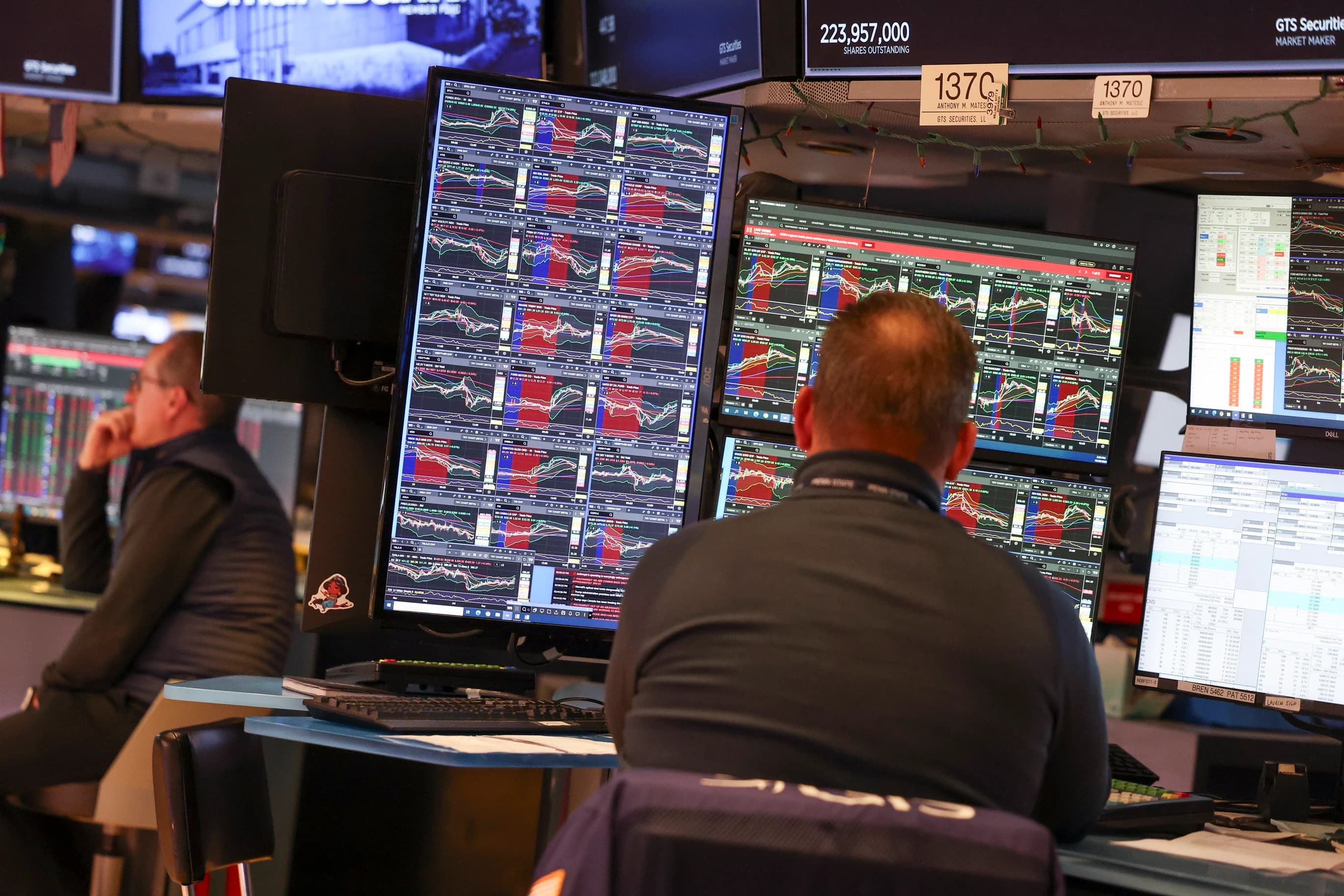
在亚马逊和英特尔公布令市场失望的季度财报后,欧美科技板块于周五盘前延续跌势。纳斯达克100期货早盘下跌2%,拖累主要股指面临单周转跌风险,而纳斯达克综合指数截至周四收盘年内仍有超过12%的累计涨幅。投资者对科技巨头激增的人工智能投资及其实际回报时间表的焦虑情绪加剧,促使资金迅速抽离大型成长型股票与半导体制造产业链。
European and US technology equities extended their slide in premarket trading on Friday following disappointing September-quarter reports from Amazon and Intel. Nasdaq-100 futures fell 2% in early trading, threatening to push the tech-heavy benchmark into negative territory for the week, even though the Nasdaq Composite remained up more than 12% year-to-date as of Thursday's close. Rising Wall Street skepticism over massive artificial intelligence investments and delayed payoff horizons prompted broad-based retreats across major tech names.
半导体板块在此轮下挫中首当其冲,美国盘前半导体标的包括美光、英伟达和安谋股价普遍走低,欧洲大型芯片股阿斯麦亦出现急剧下跌。前一交易日Alphabet遭遇历史单日最大跌幅已令市场承压,英特尔和亚马逊盘前分别下挫25%与7%,直接将抛售压力从软件云端传导至上游硬件制造和设备供应商,反映出公开市场对重资本开支周期的再平衡。
Semiconductor stocks absorbed substantial selling pressure during the session, with US premarket trading pulling down shares of Micron, Nvidia, and Arm, alongside steep declines in major European equipment makers such as ASML. After Alphabet’s record single-day plunge shook sentiment on Thursday, sharp morning drops of 25% in Intel and 7% in Amazon transmitted liquidity strain from hyperscaler cloud operators to the hardware supply chain, as market participants reassessed exposure to capital-heavy AI balance sheets.
AI资本支出担忧与科技股波动时间线Timeline of AI Capex Anxieties and Tech Stock Volatility
梳理2026年10月以来AI高额资本开支预期演变及全球科技股经历的抛售与震荡过程。
Traces the October 2026 cycle of surging AI capital expenditure commitments and the resulting volatility across global tech equities.
受人工智能硬件需求推动,台积电第三季度净利润同比增长68.7%至236亿美元,营业利润率达58.7%,并预计到2028年的资本支出将持续攀升。
Driven by booming artificial intelligence demand, TSMC's third-quarter net profit surged 68.7% to a record $23.6 billion, while the chipmaker projected higher capital expenditure through 2028.
美国9月CPI同比上涨3.7%超出预期并加剧加息担忧,全球科技股大跌导致20家领先AI与芯片公司市值蒸发逾1万亿美元,韩国Kospi 200触发熔断。
Hotter-than-expected US September inflation of 3.7% fueled interest rate fears, triggering a global rout that erased over $1 trillion in market value across 20 leading AI and chip companies.
在标普500指数创下6月下旬以来最大单周跌幅后,投资者入场逢低买入AI概念股,推动纳斯达克100期货反弹约1%,10年期美债收益率降至5.0854%。
Investors stepped in to buy beaten-down AI shares following a steep weekly retreat, pushing Nasdaq-100 futures up about 1% while the 10-year Treasury yield slipped to 5.0854%.
亚马逊维持2200亿美元资本开支但自由现金流连续告负,英特尔第四季指引不佳且受以色列工厂事故拖累;美股盘前英特尔暴跌25%、亚马逊跌7%,纳指期货挫2%。
Amazon reported negative free cash flow while keeping 2026 capex at $220 billion, and Intel missed guidance; in premarket trading Intel plunged 25% and Amazon fell 7%, dragging Nasdaq futures down 2%.
02Alphabet与亚马逊现金消耗加剧及2027年支出预期Cash Outflows Mount at Alphabet and Amazon Amid Capex Commitments
Alphabet最新季度中谷歌云业务营收同比翻倍至307亿美元,但当季自由现金流转为负91亿美元,连续第二个季度出现现金净流出。欧洲联盟委员会52亿美元反垄断罚款与张量处理单元库存承诺增加了资金压力。该公司维持2026年全财年1950亿至2050亿美元资本开支预测。首席财务官阿纳特·阿什肯纳齐表示,资本支出将在2027年显著增加并推高折旧成本,第三方算力设施的投入也将挤压短期云业务利润率。同时,核心搜索收入增速放缓至12%,引发市场对其现金牛业务动力减弱的担忧。
Alphabet's Google Cloud revenue more than doubled to $30.7 billion during the September quarter, yet heavy infrastructure outlays drove a quarterly free cash outflow of $9.1 billion, marking the company's second consecutive quarter of negative free cash flow. Cash balances faced additional pressure from a $5.2 billion European Commission antitrust penalty and inventory commitments for tensor processing units. Alphabet maintained its full-year capital expenditure forecast of $195 billion to $205 billion. Chief Financial Officer Anat Ashkenazi warned that spending would climb substantially in 2027, lifting depreciation costs while reliance on third-party computing infrastructure squeezes near-term cloud margins. Concurrently, core search advertising growth slowed to 12% year-on-year, amplifying concerns over the momentum of its primary profit engine.
亚马逊旗下AWS云业务单季营收增长39.3%至460亿美元,带动集团营业利润率达到13.9%的历史高位。然而重资产投入导致其连续两个季度自由现金流为负,截至9月30日的12个月内自由现金流净流出424亿美元,逆转了上年同期的148亿美元净流入。首席执行官安迪·贾西表示2027年资本支出将显著增加,并坚称公司具备足够的资金实力执行该项投资计划,同时预计AWS在2027年和2028年的收入增速将超过40%。
Amazon Web Services generated 39.3% revenue growth to reach $46 billion, driving total operating margin to a record 13.9%. However, ongoing capital outlays caused Amazon to log negative free cash flow for a second consecutive quarter, producing a trailing 12-month free cash outflow of $42.4 billion compared with an inflow of $14.8 billion a year earlier. Chief Executive Officer Andy Jassy indicated that capital spending would be meaningfully higher in 2027, insisting the firm can fund the investment pipeline and projecting AWS revenue growth will exceed 40% throughout 2027 and 2028.
03英特尔下季指引全线不及预期与工厂运营挫折Intel Faces Dual Blow from Forecast Miss and Plant Disruption
英特尔第四季度业绩指引全线低于华尔街预期,公司预计该季度营收在150亿至160亿美元之间,调整后每股收益为25美分,明显落后于高盛引用的170亿美元营收与43美分每股收益的一致预期。虽然数据中心与人工智能部门第三季度销售额大幅增长78%,但涵盖个人电脑芯片的客户端计算与物理人工智能业务部门营收下降5%。管理层指出,存储芯片价格上涨与企业IT预算受限持续削弱个人电脑需求,并预计2027年全球PC出货量将下降10%,制造与封装瓶颈同时限制了服务器芯片的出货能力。
Intel issued fourth-quarter financial guidance that missed Wall Street targets across the board, projecting revenue of $15 billion to $16 billion and adjusted earnings per share of 25 cents. Those ranges fell well below consensus forecasts cited by Goldman Sachs of $17 billion in revenue and 43 cents per share. Although third-quarter sales in the Data Center and AI unit rose 78%, revenue in the Client Computing and Physical AI Group, which produces PC chips, declined 5%. Management attributed the softness to higher memory prices and constrained enterprise IT budgets, forecasting a 10% decline in global PC shipments in 2027 while manufacturing and packaging bottlenecks limited server-chip deliveries.
除了市场需求疲软与供应链限制外,英特尔位于以色列迦特镇(Kiryat Gat)的芯片制造工厂发生事故,预计将导致第四季度营收直接减少约3亿美元。英特尔管理层同时提示,该工厂事故预计将在随后一个季度造成相近规模的财务拖累。受运营挫折与疲弱前景叠加冲击,英特尔股票在周四盘后大跌约23%,并在周五盘前交易中重挫25%。
Compounding its weak commercial outlook, Intel reported that an accident at its Kiryat Gat fabrication facility in Israel is expected to shave fourth-quarter revenue by about $300 million, with a similar financial drag likely to persist into the subsequent quarter. Combined with macroeconomic headwinds in client computing, the operational setback triggered sharp equity losses, sending Intel shares down approximately 23% in extended trading on Thursday and down 25% in Friday's premarket session.
04微软现金流表现分化与市场对AI基础设施周期的评估Microsoft Resists Hyperscaler Drain as Analysts Weigh AI Capex Fundamentals
与遭遇现金流大量流出的同行形成对照,微软在9月季度展现出以自身经营支持高额算力支出的能力。期内微软Azure营收增长48%,经营现金流攀升至580亿美元,直接吸纳了394亿美元的物业与设备开支,并录得186亿美元的正向自由现金流,推动其股价在同行抛售潮中走高。首席财务官艾米·胡德重申,微软预计在2027财年仍将保持正向自由现金流,但提示12月季度的资本支出包括融资租赁在内将超过500亿美元,部分第三方算力交付已延后至下半财年。
In contrast to cash outflows across peer hyperscalers, Microsoft demonstrated operational capacity to fund heavy computing infrastructure out of its ongoing business. Microsoft Azure revenue expanded 48% during the September quarter as operating cash flow climbed to $58 billion, fully absorbing $39.4 billion in property and equipment spending and leaving $18.6 billion in free cash flow, which lifted its shares against broad peer declines. Chief Financial Officer Amy Hood reiterated that Microsoft expects to sustain positive free cash flow throughout fiscal 2027, though she noted that December-quarter capital outlays will exceed $50 billion inclusive of finance leases, with certain third-party capacity deliveries shifting into the fiscal second half.
市场研究机构与投行分析师对科技巨头现金消耗周期的解读出现分歧。标准普尔Visible Alpha研究部门全球主管梅丽莎·奥托此前警告,云巨头的资本支出在短期内势必超过营收增速,令企业自由现金流持续承压。雷蒙德詹姆斯首席市场策略师马特·奥顿在接受采访时则表示,当前并非科技板块的清算时刻,尽管投资者应当重新审视行业过度拥挤的仓位配置,但人工智能资本支出受益领域的整体基本面依然稳固,短期转为自由现金流净流出属于可以接受的暂时现象。
Market analysts offered differing interpretations of the tech sector's cash-burn trajectory and multi-year investment horizon. Melissa Otto, global head at S&P Visible Alpha Research, cautioned that cloud operators' spending is projected to outpace top-line revenue growth over the near term, squeezing corporate cash generation. Offering an alternative assessment, Matt Orton, chief market strategist at Raymond James, argued that the pullback reflects crowded positioning rather than broken thesis fundamentals, maintaining that underlying commercial demand across AI capital expenditure beneficiaries remains intact and that temporary periods of negative free cash flow remain manageable for industry leaders.