赖清德双十演说欢迎美中对话降温 呼吁印太民主国家联手维稳Taiwan's Lai Welcomes US-China Talks and Urges Democratic Unity to Preserve Status Quo
台湾领导人赖清德周六在双十节演说中表示,欢迎美中两国通过对话管理竞争以降低冲突和战争风险,同时呼吁印太地区的民主国家共同维护区域和平与现状。他在演说中指责北京持续借助军事和灰色地带手段试图改变台海现状,强调台湾提升国防支出旨在威慑战争而非挑衅,并重申愿意在对等与尊严的基础上与大陆展开对话。中国国务院台湾事务办公室发言人张汉对此反驳称,赖清德的讲话罔顾事实并暴露险恶用心,批评其顽固坚持分裂思维、渲染大陆威胁,北京将坚决打击分裂势力并推进国家统一进程。赖清德发表上述讲话前,美国总统特朗普与中国国家主席习近平上个月在华盛顿举行了会晤,习近平在会中呼吁特朗普慎重处理台湾问题并反对台独。面对大国互动与区域安全形势变化,台北一方面争取国际民主伙伴支持,另一方面重申防务自立立场,而北京则坚持反分裂底线,使两岸关系的未来互动备受各方关注。
Taiwanese leader William Lai Ching-te welcomed dialogue between Washington and Beijing to manage competition and reduce the risk of conflict, while calling on Indo-Pacific democracies to work together to safeguard regional peace and the status quo during his annual Double Tenth address on Saturday. Speaking in Taipei, Lai accused Beijing of exerting sustained pressure through military and grey-zone activities to alter the cross-strait status quo, stating that Taiwan's defence spending increases aim to deter war rather than provoke, and reiterated his willingness to conduct dialogue with mainland authorities on an equal and dignified footing. In response, Zhang Han, a spokeswoman for Beijing's Taiwan Affairs Office, criticized Lai's remarks for disregarding facts and revealing sinister motives, accusing him of stubbornly clinging to a separatist mindset and playing up an alleged mainland threat while vowing that Beijing will counter separatist forces and advance national reunification. The exchanges follow a meeting in Washington last month between US President Donald Trump and Chinese President Xi Jinping, during which Xi urged Trump to handle the Taiwan question prudently and oppose independence, placing Taiwan's security posture and cross-strait relations under renewed international scrutiny.
01赖清德双十讲话聚焦美中对话与民主阵营合作Lai's Double Tenth Address Welcomes US-China Talks and Calls for Democratic Unity
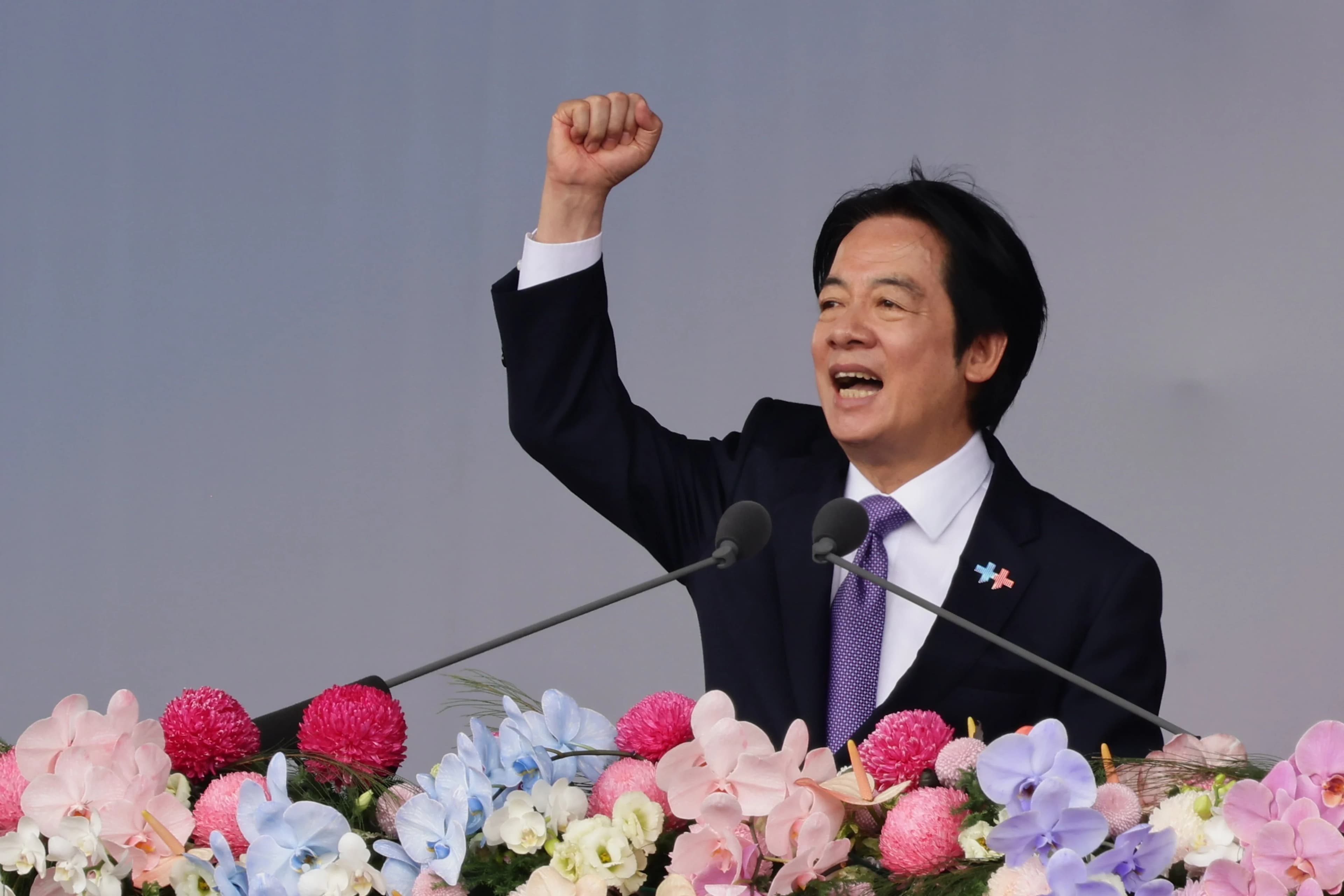
赖清德在台北总统府外发表就任以来的第三次双十节演说,将区域安全议题置于演说的核心位置。他针对美中最高层会晤明确指出,台湾欢迎美中两国通过对话管控彼此竞争,以切实降低冲突和战争的发生几率。与此同时,他向印太区域内的民主伙伴发出呼吁,主张各方必须携手应对威权主义扩张,共同维护现状并捍卫台湾民众的生存权利。
Speaking outside the Presidential Office Building in Taipei during his third Double Tenth address since taking office in May 2024, William Lai Ching-te placed regional stability at the centre of his remarks. Addressing the recent diplomatic engagement between Washington and Beijing, Lai explicitly affirmed that Taiwan welcomes the United States and China managing their bilateral competition through dialogue to reduce the risks of conflict and war. He combined that welcome with an appeal to fellow democracies across the Indo-Pacific region, calling on them to unite to preserve the status quo and respect the Taiwanese people's right to exist.
针对历史叙事与大国互动,赖清德强调维护区域和平稳定还必须拒绝扭曲二战历史。此前特朗普与习近平在华盛顿会晤期间曾提及两国在二战时期的同盟关系,台北方面对此指出,当年与盟军并肩作战的是中华民国政府而非成立于1949年的中华人民共和国,北京则反驳相关论述是对历史的背叛。赖清德表示,国际社会需要确立强权不能剥夺人民决定自身前途权利的共识。
Addressing geopolitical narratives, Lai stated that sustaining regional peace and stability requires rejecting distortions of World War II history. His comments followed the Washington meeting between Donald Trump and Xi Jinping, where both leaders highlighted their countries' wartime alliance. Taipei responded to that summit rhetoric by maintaining that the Republic of China government, rather than the People's Republic of China founded in 1949, fought alongside the allies, a historical interpretation that Beijing described as a betrayal of history. Lai added that preserving regional order depends on whether the international community upholds that powerful countries cannot deprive people of the right to determine their own future.
02北京国台办严厉反驳,指责其推行分裂与制造对抗Beijing Denounces Speech as Separatist Performance and Stirs Confrontation
针对赖清德的双十节讲话,北京方面迅速提出反驳,指责其暴露真实面目并挑起两岸对抗。中国国务院台湾事务办公室发言人张汉表示,赖清德的演说罔顾事实、误导民众并暴露险恶用心,称这是其作为“务实台独工作者”的本色表演。张汉指出,赖清德顽固坚持分裂思维,蓄意渲染所谓大陆威胁,试图通过煽动对抗来阻碍两岸关系的正常发展。
Beijing swiftly denounced William Lai Ching-te's annual address, stating that the Taiwanese leader had shown his true colours and was stirring up cross-strait confrontation. Zhang Han, a spokeswoman for the mainland's Taiwan Affairs Office, described Lai's remarks as a performance true to form by a self-described pragmatic worker for Taiwan independence, asserting that the speech disregarded facts, misled the public, and revealed sinister motives. Zhang specifically accused Lai of stubbornly clinging to a separatist mindset and intentionally playing up an alleged mainland threat to fuel regional discord.
张汉同时重申了北京在涉台事务上的既定政策立场。她强调,大陆方面将坚决打击台独分裂势力,坚决反对外部势力干涉,切实维护台海地区的和平与稳定。发言人进一步说明,北京将推进两岸和平发展与融合发展,坚定推进国家统一进程,并表明北京将台湾视作中国不可分割的一部分,始终未放弃对使用武力实现统一的选项。
The spokeswoman reaffirmed Beijing's fundamental policy regarding Taiwan and cross-strait relations. Zhang said that Beijing will resolutely crack down on separatist forces, firmly oppose interference by external forces, and safeguard peace and stability across the Taiwan Strait. She outlined that mainland authorities will continue to promote peaceful and integrated cross-strait development while advancing the cause of national reunification, noting Beijing views Taiwan as part of China and has not ruled out the use of force to accomplish reunification.
03防务自主与应对灰色地带压力的政策阐述Self-Reliant Defence and Countering Grey-Zone Pressures
在政策阐述部分,赖清德指出北京正持续通过军事手段和灰色地带活动施压,企图改变台海现状。他提出和平不能寄托于一厢情愿的空想,台湾必须直面威权主义扩张,同时警惕以中国大陆为中心的“红色供应链”所带来的挑战。赖清德强调,台湾将继续强化整体防务能力,利用自身在半导体等先进产业的技术优势,构建更具自主能力的国防体系。
Detailing his security policy, William Lai Ching-te stated that Beijing continues to apply pressure through military manoeuvres and grey-zone activities without engaging in outright warfare to alter the status quo across the Taiwan Strait. Emphasizing that peace cannot rest on wishful thinking in the face of authoritarian expansion, Lai warned of strategic challenges arising from mainland-centred red supply chains. To mitigate these risks, he affirmed that Taiwan will reinforce its defence capabilities and leverage manufacturing strengths in high-technology sectors, such as semiconductors, to build a more self-reliant defence infrastructure.
赖清德重申,提升国防支出的核心目的是威慑战争而非制造挑衅。他在去年的讲话中曾公布被称为“T-Dome”的导弹防御盾计划,并设定防务预算今年超过本地生产总值的3%、到2030年达到5%的目标。赖清德同时表示,台湾愿意与大陆展开对话与接触,但明确坚持此类沟通必须建立在对等与尊严的基础之上。
Addressing Taiwan's military outlays, Lai asserted that increasing defence spending serves as a mechanism to deter war rather than incite provocation. In his 2025 address, he outlined plans for a missile shield known as the T-Dome to counter mainland military pressure, alongside fiscal targets for defence expenditure to exceed 3 per cent of gross domestic product this year and reach 5 per cent by 2030. Lai maintained that Taipei remains willing to engage in cross-strait dialogue with mainland authorities, provided such interactions take place on an equal and dignified footing.
04学者观察与美中互动背景下的台海动向Scholarly Assessment and Geopolitical Context After the Trump-Xi Summit
观察人士注意到赖清德在演说措辞上的调整。赖清德在讲话中并未重复以往的部分争议表述,包括两年前曾提及的两岸“互不隶属”论调。北京联合大学台湾研究院教授朱松岭分析指出,赖清德的讲话大体符合外界预期,并未增加其他挑衅性用语。他认为赖清德欢迎美中对话的表态,显示其意识到了美中关系以及台海局势出现的新动向,而更宏观的美中关系走势对台湾问题产生了重要影响。
Observers observed adjustments in William Lai Ching-te's rhetoric, noting that he refrained from repeating some of his more contentious assertions from previous addresses, including his claim two years ago that Taiwan and the mainland are not subordinate to each other. Zhu Songling, a professor at the Institute of Taiwan Studies at Beijing Union University, assessed that Lai's speech fell largely in line with expectations and avoided additional provocative phrases. Zhu said Lai's welcome for US-China talks demonstrated awareness of new developments in Washington-Beijing relations and the cross-strait environment, adding that broader US-China bilateral ties have a significant impact on the Taiwan issue.
朱松岭同时指出,赖清德支持台独的基本立场并未改变,且正越来越多地将台湾安全置于国际话语体系中加以论述。多数国家包括作为台湾主要军备供应方和国际支持者的美国,在外交上并未承认台湾为独立国家,但美国受国内法律约束须为台湾提供自卫武器,并反对任何单方面以武力改变现状的企图。北京在赖清德就职后多次在台岛周边举行大规模军事演习,各方正持续注视华盛顿与北京高层接触对台海局势带来的后续变化。
Zhu noted that Lai's pro-independence stance remains unchanged, observing that the Taiwanese leader increasingly frames Taiwan's security in international terms. Most countries, including the United States, which serves as Taiwan's primary arms supplier and principal international backer, do not recognise the island as an independent state; however, Washington remains bound by domestic law to provide defensive weapons to Taiwan and opposes any attempts to alter the status quo by force. Following past large-scale exercises conducted by Beijing around Taiwan, external analysts continue tracking how shifting high-level interactions between Washington and Beijing affect cross-strait stability.