尼泊尔洪灾隧道受困十天幸存者呼吁政府继续搜救Nepal Tunnel Flood Survivor Urges Government to Continue Search Operations
2026年8月26日中尼边境冰川山体滑坡引发特大洪水,导致至少1429人遇难、超过5640人失踪,重创沿线多个水电站项目。现年30岁的尼泊尔水电站工人桑贾伊·萨(Sanjay Sah)在被淹没的漆黑隧道中受困长达10天,依靠饮用泥水和印度教祈祷艰难维持求生意志,于9月4日被灾害应对救援队成功救出并送医康复。被困期间,萨通过与附近同样受困的45岁工友卡比尔·马哈詹(Kabir Maharjan)喊话相互支撑,马哈詹也一同获救生还。随着救援行动持续推进,搜救队伍在9月5日救出一名中国工人,但此后隧道内未再探测到新的生命迹象。已顺利返回萨普塔里县家中与亲人团聚的萨公开发声,呼吁尼泊尔政府切勿终止搜救行动,强调仍有可能存在幸存工友,即便有人遇难也应找到遗体移交给家属安葬。
A catastrophic flood triggered by a glacial mountain collapse along the China-Nepal border on August 26, 2026, killed at least 1,429 people and left more than 5,640 missing, devastating several hydropower facilities in the region. Nepali hydropower worker Sanjay Sah, 30, survived for 10 days in total darkness inside a flooded tunnel by drinking muddy water and chanting Hindu prayers before a disaster response team pulled him out alive on September 4. During his prolonged entrapment, Sah maintained hope by shouting back and forth with trapped 45-year-old co-worker Kabir Maharjan, who was also brought out alive by rescuers. A Chinese worker was pulled to safety on September 5, but search teams have not detected further signs of life since. After recovering in a Kathmandu hospital and returning home to Saptari district to reunite with his family, Sah urged the Nepali government to continue search and rescue operations in the tunnels, stating that remaining trapped colleagues might still be alive or their bodies should be recovered for their families.
01突发洪水与绝境受困Sudden Flood and Tunnel Entrapment
2026年8月26日灾难发生当天,正在水电站一线值班的桑贾伊·萨与现场工友遭遇了突如其来的特大洪峰。根据萨的事后回忆,尽管现场人员此前接到了预警提示,得知上游即将有大水来袭并被要求保持戒备,工人们也迅速着手关闭所有机械设施并组织同伴紧急撤离,但实际留给他们的逃生窗口极其短暂。
On August 26, 2026, Sanjay Sah was on duty at the hydropower facility when the massive flood struck the project site with extraordinary speed. Sah recalled that although workers received advance warnings to stay alert because a major flood was approaching, the incoming surge left virtually no time for a complete evacuation. The workforce quickly shut down operations and attempted to alert and evacuate their colleagues from the danger zone.
咆哮而至的洪流掀起高达数米、如同海啸般的巨大水浪,在短短数分钟内就完全吞没了整个作业隧道。尼泊尔政府将如此空前规模的冰川崩塌山洪归因于全球气温上升对喜马拉雅山脉造成的严重破坏。伴随汹涌泥水的猛烈灌入,萨与身边的大批工友被迫分散走散,瞬间陷入与外界完全隔绝的绝境之中。
Within minutes, towering waves measuring several meters high swept through the area and entirely engulfed the tunnel complex. The Nepali government pointed to the severe impact of rising global temperatures on the Himalayan mountain range as the driving factor behind the unprecedented glacial collapse. As raging floodwaters inundated the underground passages, Sah was separated from his fellow workers, leaving him isolated inside the submerged darkness.
我当时正在值班,突然一场难以想象的洪水袭来,掀起了数米高、如同海啸般的巨浪。我们确实收到了保持警惕、大水即将来临的信息,我们也尽可能保持警觉并组织撤离朋友。但大水根本没有给我们留下多少时间……我们关闭了一切设备,试图救援和疏散工友。
I was on duty, and then suddenly an unthinkable flood hit us, with tsunami-like waves that were several metres tall. We did get information to stay alert, that a big flood is coming. As much as possible, we tried to be alert and evacuate our friends. But the water did not give us much time … we shut down everything, and tried to rescue and evacuate our friends.
桑贾伊·萨(Sanjay Sah),幸存水电站工人Sanjay Sah, surviving hydropower worker
02黑暗中的十天求生与同伴互助Ten Days in Darkness and Mutual Support
在被困于漆黑隧道的十天里,萨完全丧失了对时间流逝的感知,在没有洁净水源的极端环境下,他只能依靠身边搜寻到的泥水维持生命。萨表示,在漫长而绝望的幽闭环境中,坚定的印度教信仰成为他精神上的主要支柱,他通过持续诵读摩诃真言(Maha Mantra)获得心理力量,从而克服了内心的恐惧与绝望。
During his ten days trapped in total darkness, Sanjay Sah lost all sense of time and was forced to drink whatever muddy water he could find inside the submerged tunnel. Sah recounted that his deep Hindu faith provided the vital mental stamina needed to endure the isolation. By continuously chanting Maha Mantra prayers, he drew on divine energy that helped him ward off overwhelming panic and despair throughout the prolonged ordeal.
除了宗教信仰带来的支撑外,声音的互动也成为了至关重要的生存纽带。45岁的工友卡比尔·马哈詹当时同样被困在距离不远的位置,尽管两人因瓦砾阻隔无法靠近,但他们通过在黑暗中持续隔空喊话交流,互相鼓励以维持求生意志,直到搜救人员最终打通通道将两人解救脱险。
Mutual communication between trapped workers also proved crucial to their survival. Kabir Maharjan, a 45-year-old colleague stranded in a nearby section of the tunnel, remained in vocal contact with Sah. Although separated by debris and floodwaters, hearing each other's voices across the underground void provided an indispensable psychological lifeline that helped both men hold onto hope until rescue crews finally reached them.
我之所以能活下来,是因为我内心深处的信念与信心。我一直在诵念摩诃真言,从中获得的神秘力量让我没有感到恐惧或绝望,使我得以在那里坚持下去。
I survived because of my deep belief and confidence. I was chanting Maha Mantra, and the divine energy I received because of that allowed me to not be scared or despair. I was able to stay there.
桑贾伊·萨,幸存水电站工人Sanjay Sah, surviving hydropower worker
03成功获救与返乡团聚Rescue and Family Homecoming
在经历多日的持续挖掘与艰难作业后,灾害应对搜救队伍于9月4日打通受损隧道,将30岁的桑贾伊·萨安全救出。重见天日时,长期处于黑暗中的萨完全丧失了时间概念,向搜救人员询问的第一句话便是核实自己究竟受困了多少天,并以为自己仅仅度过了数日。
Following days of excavation and painstaking operations, disaster response search teams broke through the clogged tunnel passages on September 4 and pulled 30-year-old Sanjay Sah out alive. Deeply disoriented after surviving in total darkness, Sah's very first question to his rescuers was to ask how many days had passed, having mistakenly believed he had been trapped for only a few days rather than ten.
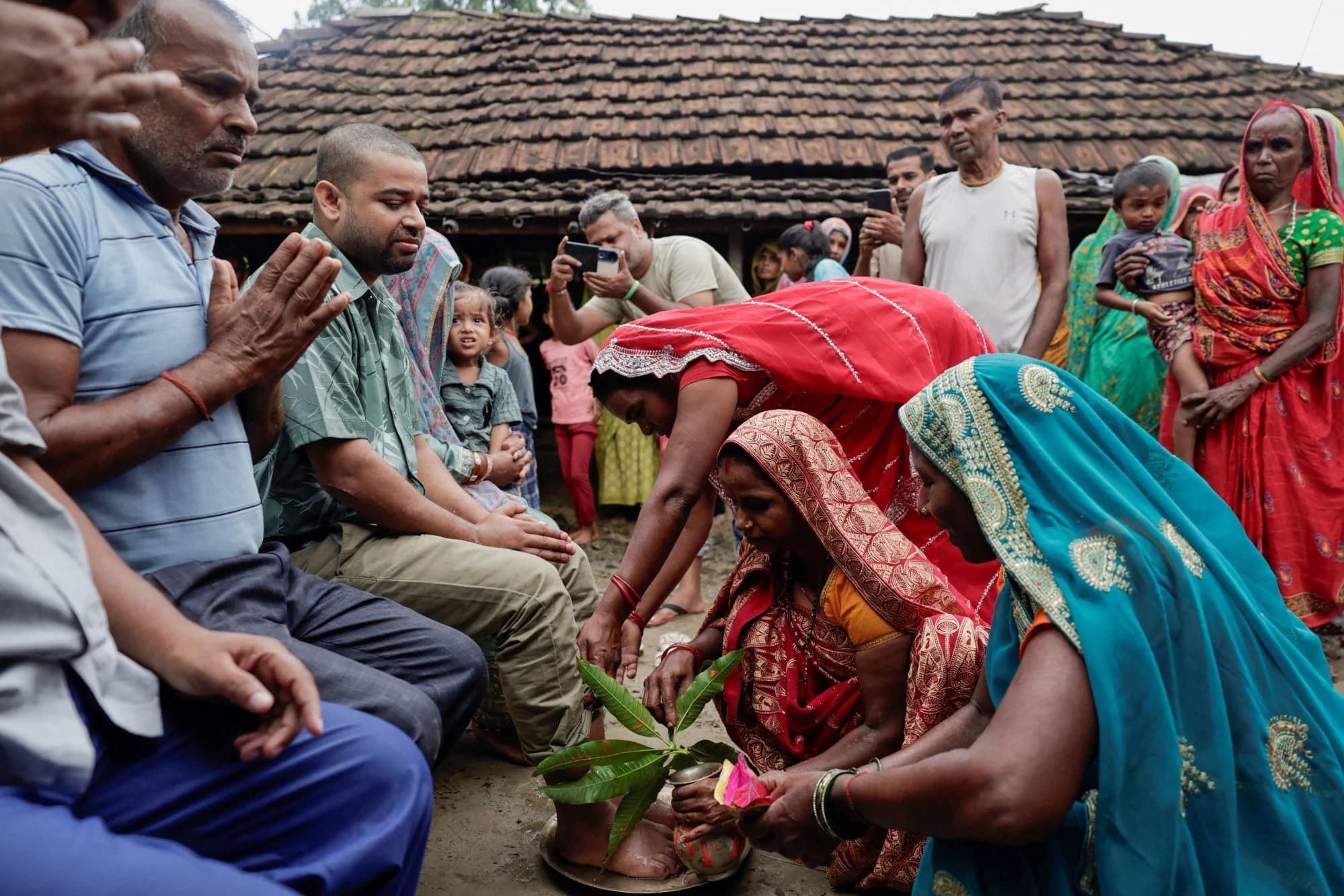
萨在加德满都的一家医院接受了数日观察与康复治疗,随后于周日启程返回位于萨普塔里县的家中。家人、邻里与好友用气球、色彩和花环装点房屋,并准备蛋糕热烈庆祝他的平安归来。他的母亲卡普尔·德维·萨(Kapur Devi Sah)在相拥落泪后依传统为他洗脚祈福,妻子拉克希米·库马里·萨(Lakshmi Kumari Sah)也抱着女儿迎接丈夫归家,表示全家人始终未曾放弃重逢的希望。
After spending several days recuperating in a Kathmandu hospital, Sah traveled on Sunday back to his home village in Saptari district. Relatives, friends, and neighbours decorated the residence with colorful balloons and garlands and prepared a celebratory cake to mark his return. His mother, Kapur Devi Sah, wept as she embraced him tightly and washed his feet in an auspicious traditional welcome, while his wife Lakshmi Kumari Sah, holding their daughter, shared that the family had held onto hope throughout the ordeal.
获救的时候,我问的第一句话是:‘已经过去多少天了?’对方告诉我过去整整十天了,而我原本以为只过了几天。
When I was rescued I first asked, how many days has it been? He said that it has been 10 days. I thought it had been just a few days.
桑贾伊·萨,尼泊尔洪灾幸存水电站工人Sanjay Sah, surviving Nepali hydropower worker
04搜救现状与幸存者的持续呼吁Ongoing Search Efforts and Survivor's Appeal
在桑贾伊·萨与卡比尔·马哈詹获救次日,搜救人员于9月5日在受损隧道中成功救出了一名中国工人。然而自那次救援之后,搜救队在被泥浆、积水与岩石严重堵塞的地下廊道内未再探测到任何新的生命迹象。尽管救援团队仍在狭窄复杂的地下环境中艰难掘进并排查可能存在被困人员的气室区域,但现场搜救条件依然面临着巨大的地质阻碍与次生风险。
Following the rescues of Sanjay Sah and Kabir Maharjan, emergency teams pulled a Chinese worker out of the damaged underground complex on September 5. Rescuers have not detected further signs of life inside the passages since that operation, as subterranean corridors remain heavily clogged with thick mud, floodwaters, and collapsed rock fragments. Search crews continue clawing through the debris-filled infrastructure to reach pockets where missing personnel are suspected to remain.
面对复杂的搜救局面,重获新生的萨在表达庆幸之余也坦言心情十分沉重,因为仍有众多并肩作业的工友下落不明。萨呼吁尼泊尔政府切勿中断隧道搜救作业,并强调现场依然存在工友幸存的可能性;即便部分受困人员已经不幸罹难,搜救人员也应尽力寻回遗体并转交给家属妥善安葬,给守候多日的家庭带来交代。
Reflecting on his survival, Sah expressed mixed emotions, stating that while he is grateful to have received a second life, he feels profound sorrow over the colleagues who remain unaccounted for underground. Sah urged Nepali authorities not to halt the ongoing search and rescue operation, emphasizing that other trapped workers could still be clinging to life. He added that even if missing colleagues have died, authorities should recover their bodies and return them to grieving families.
我希望政府继续搜救。现场可能仍有人活着。或者他们能找到遇难朋友的遗体,并移交给他们的家属。
I hope the government continues its search and rescue. It is possible there might still be someone alive. Or they will be able to find bodies of friends who have passed away and hand them over to their families.
桑贾伊·萨,尼泊尔水电站幸存工人Sanjay Sah, surviving Nepali hydropower worker
