日本防卫大臣驳斥中国“新军国主义”指责Japan Defense Minister Rejects China's 'Neo-Militarism' Accusations
日本防卫大臣小泉进次郎在新加坡举行的香格里拉对话会上发表讲话,强烈驳斥了中国关于日本奉行“新军国主义”的指责,称其完全不符合事实。此前,中国国防部于5月28日通过新华社呼吁国际社会共同遏制日本的“新军国主义”。小泉进次郎在反驳中指出,中国拥有庞大的核武库和战略轰炸机,而日本两者皆无,却被贴上“新军国主义”的标签,这种指责十分奇怪且虚假。同时,小泉进次郎对中国国防部长董军连续第二年缺席该论坛表示遗憾,导致双方无法举行部长级会晤。他强调,在当事人缺席的情况下重复无端指责无助于解决分歧,而日本对话的大门始终敞开。此次中国派出由国防大学少将孟祥青率领的较低级别代表团参会,孟祥青在会上提及1946年远东国际军事法庭审判80周年,以此对东京方面进行抨击。日本方面则重申其作为和平国家长期遵守国际法的立场,其和平道路已赢得国际社会的认可。
Japanese Defense Minister Shinjiro Koizumi rejected China's accusations that Japan is pursuing 'neo-militarism' during his speech at the Shangri-La Dialogue in Singapore, calling the claims completely untrue. The remarks follow a May 28 call by China's defense ministry, reported by state media outlet Xinhua, for the international community to jointly contain Japan's 'neo-militarism.' Koizumi countered the label by pointing out that China possesses a massive arsenal of nuclear weapons and strategic bombers while Japan has neither. He also expressed regret over the absence of his Chinese counterpart, Dong Jun, who skipped the forum for a second consecutive year, leaving no opportunity for a ministerial-level meeting. Koizumi stated that repeating unfounded claims in the other party's absence does not help resolve differences, emphasizing that Japan's door to dialog remains open. Beijing was represented instead by a lower-level delegation led by Major General Meng Xiangqing from the PLA National Defence University, who criticized Tokyo by referencing the 80th anniversary of the 1946 International Military Tribunal for the Far East.

01驳斥“新军国主义”指责Rejection of 'Neo-Militarism' Accusations
日本防卫大臣小泉进次郎在香格里拉对话会上发表讲话,强烈驳斥了中国关于日本奉行“新军国主义”的指责,并称这一说法完全不符合事实。小泉进次郎强调,日本长期以来始终一贯地遵守国际法,其作为和平国家的道路已经赢得了该地区和国际社会的认可,这一事实绝不会被虚假的指控所动摇。
During his speech at the Shangri-La Dialogue, Japanese Defense Minister Shinjiro Koizumi strongly rejected China's accusations that Japan is pursuing "neo-militarism," stating that such claims are nothing further from the truth. Koizumi emphasized that Tokyo has consistently respected international law, adding that Japan's long-standing path as a peace-loving nation has been valued by both the region and the wider international community, a fact that will not be shaken by false claims.
小泉进次郎表示,尽管日本目前正在增加防卫开支并修订武器出口指南,但日本对国际社会对话的大门始终是敞开的。他重申,日本将继续坚定不移地走和平发展道路,并指出中方的指责与日本长期以来的实际和平表现完全背道而驰。
The defense minister noted that even as Japan increases its defense spending and revises its arms export guidelines, Tokyo's door to dialog with the international community remains wide open. He reaffirmed Japan's commitment to its peaceful trajectory, arguing that the accusations made against the country run entirely counter to its established record of international cooperation.
02对比两国军备现状Contrast of Military Arsenals
小泉进次郎在讲话中通过直接对比中日两国的军事力量,阐述了中方指责的不合理性。他要求与会者思考一个事实,即存在一个拥有庞大核武库和战略轰炸机国家,而日本这两种武器都没有。他指出,在这样的情况下日本却被贴上“新军国主义”的标签,这种指责是十分奇怪的。
In his speech, Koizumi illustrated the illogical nature of China's accusations by directly contrasting the military capabilities of the two nations. He asked the audience to consider the reality of a country that possesses a massive arsenal of nuclear weapons and strategic bombers, while Japan has neither of these weapons. He pointed out the absurdity of Japan being labeled "neo-militarist" under such circumstances, calling the accusation strange.
通过强调日本完全没有核武器和战略轰炸机,小泉进次郎旨在说明中方的“新军国主义”指控缺乏事实依据。他以此逻辑反驳了北京方面的言论,并表明在两国实际军备现状存在如此巨大差距的情况下,中方对日本的批评是站不住脚的。
By highlighting that Japan possesses neither nuclear weapons nor strategic bombers, Koizumi aimed to demonstrate that Beijing's "neo-militarism" label lacks any factual basis. He used this stark contrast in military hardware to argue that the criticism leveled against Tokyo is entirely unfounded given the actual balance of armaments between the two countries.
03呼吁坦诚对话与对中方防长缺席的遗憾Call for Candid Dialog and Regret Over Counterpart's Absence
小泉进次郎在香格里拉对话会上特别指出了北京方面缺少部长级官员参会的情况。他表示,由于无法在论坛上与中国国防部长董军会面,他感到“十分遗憾”。他强调,尽管国家之间确实会产生认知差异和摩擦,但在对方缺席的情况下重复“无端指责”并不是解决问题所需要的做法。他认为,这种单方面的指责无法替代面对面的直接沟通。
During the Shangri-La Dialogue, Koizumi specifically highlighted Beijing's lack of a ministerial-level official, expressing that he was "feeling sad" about being unable to meet with his Chinese counterpart, Dong Jun, at the forum. He emphasized that while differences in perception and frictions do arise between nations, a repetition of "unfounded claims in the other side's absence" was not what was needed to address these issues.
此外,小泉进次郎重申,即使日本正在增加防卫开支并修订武器出口指南,日本对国际社会对话的大门也始终是敞开的。他呼吁中方进行坦诚的对话,并指出只有通过直接的部长级交流,双方才能有效管控分歧。他强调,在当事人缺席的情况下继续散布不实言论,对于建立建设性的双边关系毫无益处。
The Japanese defense minister reiterated that Tokyo's door to dialog remains always open to the international community, even as the country increases its defense spending and revises its arms export guidelines. He advocated for candid, face-to-face discussions to resolve bilateral disagreements, noting that unilateral accusations made without direct ministerial communication do not contribute to resolving differences.
04中方代表团的表态与历史问题交锋Chinese Delegation's Stance and Historical References
在本次香格里拉对话会上,中国国防部长董军连续第二年缺席该论坛。北京方面此次派出了一支级别较低的代表团参会,该代表团由中国人民解放军国防大学少将孟祥青率领。这一代表团的层级构成,也使得中日双方未能在论坛期间举行部长级会晤。
At this year's Shangri-La Dialogue, Chinese Defense Minister Dong Jun skipped the forum for the second consecutive year. Instead, Beijing sent a lower-level delegation to the summit, which was led by Major General Meng Xiangqing from the People's Liberation Army National Defence University. This delegation level meant there was no opportunity for a ministerial-level meeting between the two nations.
在对话会早些时候,孟祥青少将对东京方面进行了抨击。他特别提到,2026年是远东国际军事法庭开庭80周年。他指出,在1946年的这场审判中,日本领导人因其在第二次世界大战中犯下的罪行而接受了审判。中方代表团以此历史事件作为依据,对日本当前的防卫政策和动向展开了批评。
Earlier at the forum, Major General Meng took a swipe at Tokyo by referencing historical grievances. He noted that 2026 marks the 80th anniversary of the opening of the International Military Tribunal for the Far East, where Japanese leaders were tried in 1946 for their crimes in World War II. The Chinese delegation used this historical milestone to level criticism against Japan.
日本战后防卫政策演变与武器出口解禁Evolution of Japan's Postwar Defense Policy and Arms Export Deregulation
梳理日本近期防卫政策的重大转变,帮助理解中方“新军国主义”指责的历史与现实背景。
Trace the recent major shifts in Japan's defense policy to help readers understand the historical and practical context behind China's 'neo-militarism' accusations.
首相高市早苗内阁批准新的出口准则,允许向国际市场销售日本研发的战舰和战斗无人机等杀伤性武器。这一举措标志着该国战后和平主义政策发生重大转变,旨在加强国防工业并应对地区安全挑战。
Prime Minister Sanae Takaichi's Cabinet approved new guidelines allowing the export of Japanese-developed lethal weapons, such as warships and combat drones. This marked a major shift in the country's postwar pacifist policy, aimed at strengthening its defense industry and addressing regional security challenges.
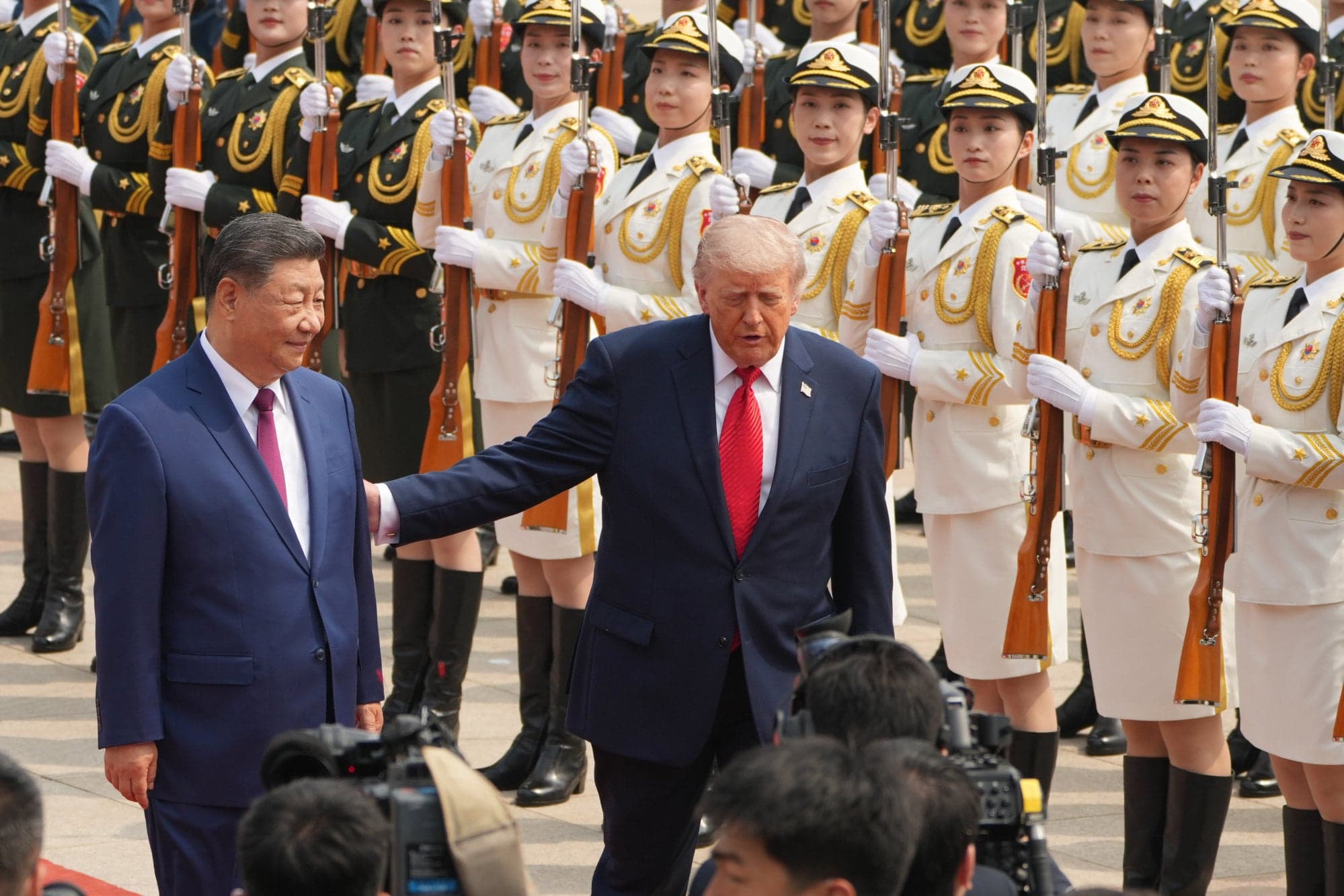
中国国家主席习近平在北京会晤美国总统特朗普,就台湾问题发出严厉警告,强调地缘政治冲突风险,显示出中方对周边安全局势及美日同盟动向的高度警惕。
Chinese President Xi Jinping met with U.S. President Donald Trump in Beijing, issuing a stern warning on Taiwan and highlighting geopolitical conflict risks, reflecting Beijing's high vigilance over regional security and US-Japan alliance dynamics.
防卫大臣小泉进次郎在新加坡香格里拉对话会上,针对中方“新军国主义”的指责进行驳斥,指出日本既无核武库也无战略轰炸机,呼吁中方进行坦诚对话。
Defense Minister Shinjiro Koizumi rejected China's 'neo-militarism' accusations at the Shangri-La Dialogue in Singapore, pointing out that Japan has neither nuclear weapons nor strategic bombers, and called for candid bilateral dialogue.