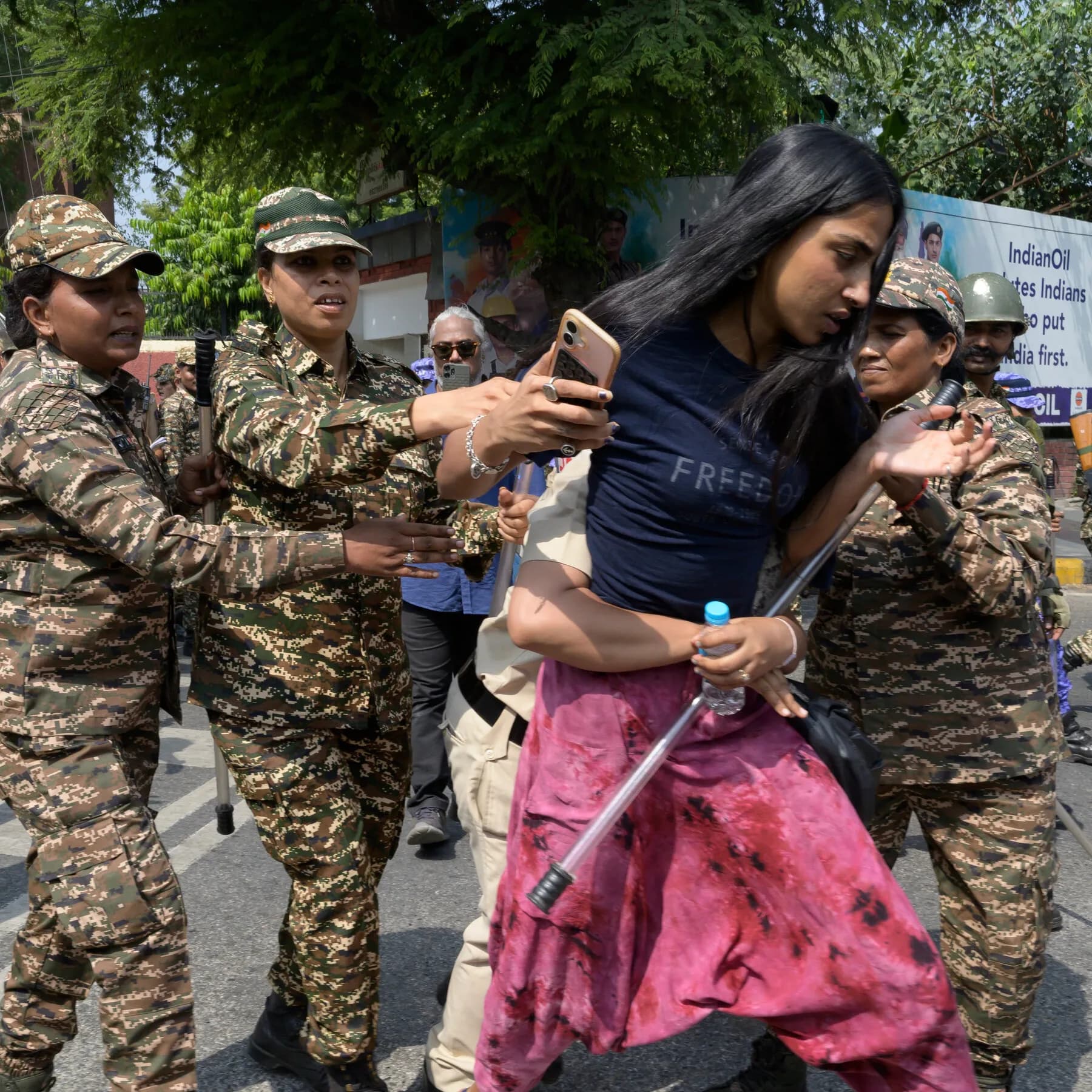
布宜诺斯艾利斯学生抗议紧缩政策引爆冲突 警方逮捕至少25人Clashes Erupt at Argentine Student Protests Over Milei's Austerity, Police Arrest at Least 25
阿根廷首都布宜诺斯艾利斯爆发大规模抗议,数千名大学生、教职员工、工会成员及反对派支持者聚集在国会外,要求总统哈维尔·米莱政府执行陷入法律争议的大学拨款法,抗议随后演变为警民暴力冲突。示威者向警方投掷石块,警方则使用催泪瓦斯、橡皮子弹和水炮驱散人群。阿根廷国家安全部与相关报道证实,现场至少有25人被逮捕,包括至少8名警察在内的多名安保人员和抗议者受伤。这场冲突使米莱政府推行的紧缩措施再次面临公开对抗。国会此前推翻了米莱对大学资助法的否决,且联邦法官因政府拒绝按通胀调整薪资与奖学金,对其处以每日10万比索(约70美元)的罚款。米莱政府坚持以缺乏资金及该法面临诉讼挑战为由拒绝拨款,而布宜诺斯艾利斯大学国家经济研究中心数据显示,2026年上半年阿根廷公立大学实际公共支出已下降41%。
Thousands of students, university staff, trade union members, and opposition supporters rallied outside Congress in Buenos Aires on Thursday to demand that President Javier Milei's administration implement a disputed university funding law, culminating in violent street clashes with police. Demonstrators threw stones while law enforcement responded with tear gas, rubber bullets, and water cannons to disperse crowds from the plaza. Security authorities and reports confirmed that at least 25 people were detained and multiple individuals were injured, including at least eight police officers. The confrontation brings simmering resistance against Milei's sweeping public-sector austerity to a head following months of legal and political gridlock. Although Congress overturned Milei's veto of the legislation—mandating inflation-linked increases for faculty salaries, operational funds, and scholarships—the administration has refused to release the money, asserting that no funds exist and that the statute remains suspended under legal challenges. A federal judge has imposed daily fines of 100,000 pesos on the government for non-compliance, while university research data shows public university spending dropped 41% in real terms during the first half of 2026.
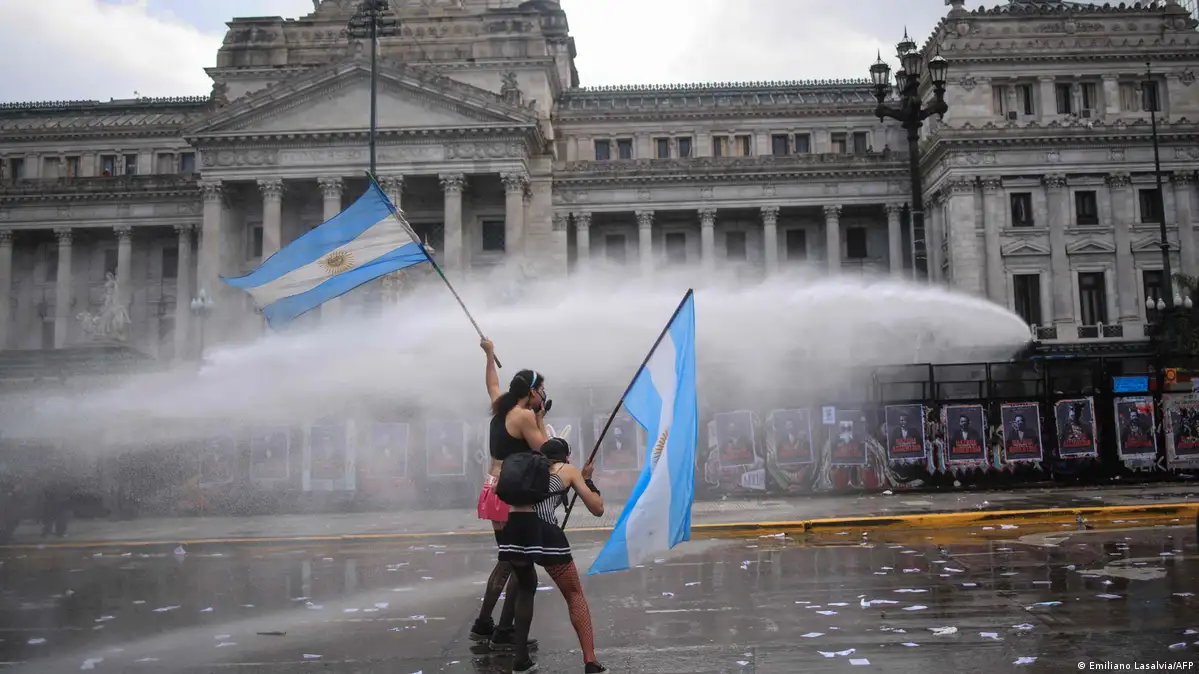
01布宜诺斯艾利斯街头抗议与暴力冲突Street Demonstrations and Clashes in Buenos Aires
周四,布宜诺斯艾利斯市中心的抗议活动迅速演化为混乱局面,游行长队阻塞了多条主要城市干道。人群最初响应呼吁举行大罢工并要求政府执行教育资助法案,但随着集会持续进行,国会前广场演变为激烈的对抗现场。部分蒙面示威者向警方投掷石块,现场其他抗议者一度试图推开并制止投掷石块的人员,但现场局势迅速失控。
Long columns of demonstrators blocked major thoroughfares across central Buenos Aires on Thursday as crowds rallied for a general strike demanding compliance with the university funding law. Although organized as a peaceful mobilization, the gathering in front of Congress rapidly degenerated into confrontation. Masked individuals threw stones toward police cordons, prompting some other demonstrators to intervene and try pushing the stone-throwers back before disorder overwhelmed the square.
防暴警察随即动用水炮、催泪瓦斯以及橡皮子弹驱散聚集的人群。阿根廷国家安全部指出,冲突导致至少25人被当场逮捕,包括8名警察在内的多名安保人员和示威者受伤。安全部长亚历杭德拉·蒙特奥利瓦在社交媒体上表示,抗议者企图“制造混乱”,并强调示威权利并不意味着“行使暴力的权利”。这是米莱就任以来第五次针对教育经费削减的大规模示威活动。
Riot officers deployed water cannons, tear gas, and rubber bullets to push back and disperse the crowds from the parliamentary grounds. Argentina's National Security Ministry confirmed that at least 25 individuals were taken into custody and multiple people were injured, including at least eight police officers. Security Minister Alejandra Monteoliva stated on social media that demonstrators sought to "sow chaos," adding that the right to protest does not constitute "a right to exercise violence." The rally marked the fifth major demonstration over education spending cuts since President Javier Milei took office.
02校园占领与高校师资流失危机Campus Occupations and Faculty Brain Drain
在布宜诺斯艾利斯大学精确与自然科学学院的中央大厅内,学生们聚集举行大会并宣布占领该建筑一天,大厅周围挂满了抗议米莱削减开支的横幅标语。占领行动是阿根廷学生唤起公众关注并向政府施压的抗议形式,参与者警告称,目前的紧缩政策正在直接威胁阿根廷免费公立高等教育的存续与未来。
Inside the central hall of the Exact and Natural Sciences building at the University of Buenos Aires, students gathered for an assembly and announced a one-day occupation of the facility, draping the area with banners protesting President Javier Milei's expenditure reductions. The takeover represents a traditional form of student demonstration in Argentina aimed at building public awareness and pressing authorities, with participants warning that sustained austerity endangers the viability and future of the nation's tuition-free public higher education system.
校园内的师资力量流失问题同样愈发突出。物理系学生埃米利亚诺·加托向媒体表示,优秀教授正因薪水无法满足基本生活需求而集体出走至私立大学。布宜诺斯艾利斯大学化学系教授玛丽亚·特蕾莎·德·赫苏斯说明,自己每月收入仅约700美元且难以为继,参与抗议是别无选择的最后手段。她强调公立教育是保障所有人受教育机会的关键基石,但政府却忽视了这一现实。
Academic faculty retention has emerged as another core challenge across departments. Physics student Emiliano Gato stated to media that premier professors are leaving en masse for private universities because degraded salaries cannot cover essential living needs. Maria Teresa de Jesus, a professor in the university's chemistry department, explained that her monthly salary amounts to roughly $700, making basic subsistence increasingly difficult and leaving street protest as a final recourse. She noted that public education remains critical to ensuring universal educational access across the country, but argued the government is disregarding this responsibility.
03国会立法否决权较量与法院罚款裁决Congressional Veto Override and Judicial Fines
引发抗议风暴的法律争端源于国会与米莱总统之间的权力拉锯。国会在2025年表决通过大学资助法,要求政府增加对公立高等院校的财政投入。法案明确规定,国家必须参照2023年12月起的通货膨胀率提高教职工薪资,恢复因通胀受损的学生奖学金,定期更新大学运转预算,并向科学研究、附属医院和基础设施建设提供专项资金。米莱随后行使了总统否决权阻止该法实施,但国会随后推翻了他的否决,同时还推翻了另一项宣布残障人士紧急状态的法案否决。
The legal standoff driving the protests stems from an institutional contest between Congress and President Javier Milei over higher education financing. Lawmakers initially passed the University Funding Law in 2025, obligating the state to expand its financial commitments to public institutions. The statute mandates that the government elevate academic salaries in line with inflation measured since December 2023, restore student scholarships diminished by rising prices, regularly adjust operating budgets, and guarantee funding lines for scientific research, university hospitals, and physical infrastructure. Milei exercised his presidential veto against the measure, but Congress subsequently voted to override the rejection alongside another overturned veto declaring a disability emergency.
尽管立法机构推翻了否决,多项司法裁决也责令行政部门划拨资金,米莱政府依然拒绝执行。米莱政府主张国会在立法时并未明确资金来源。一名联邦法官针对政府拒绝恢复薪资和奖学金等部分法定要求的行为,裁定对行政当局处以每天10万比索(约合70美元)的罚金。政府方面则辩称,由于已对该法案提起法律挑战,该法目前处于暂停状态,拒不发放相关款项。
Despite lawmakers overriding the presidential veto and several court decisions instructing the executive branch to release the mandated appropriations, the Milei administration has refused to enact the legislation. Government officials argued that lawmakers failed to identify mechanisms to finance the obligations. A federal judge subsequently ordered daily fines of 100,000 pesos, or approximately $70, against the government for non-compliance with statutory provisions requiring the restoration of salaries and student aid. Administration spokespersons maintain that the law remains legally suspended pending ongoing government lawsuits, leaving the contested funds frozen.
阿根廷高校紧缩争议演进Key Milestones in Argentina's University Austerity Dispute
梳理米莱政府削减教育经费引发立法博弈与抗议冲突的经过。
Tracing the escalation from Milei's education spending cuts to congressional clashes and violent protests.
米莱于2023年就任阿根廷总统,随后推行严厉的财政紧缩措施,裁减数千名国家雇员、关闭联邦部门并大举削减公共支出以遏制通货膨胀。
After taking office in 2023, President Javier Milei launched aggressive austerity measures, laying off thousands of state workers, shuttering federal ministries, and slashing public expenditures to reduce inflation.
阿根廷国会于2025年通过大学预算法,要求根据通胀调整薪资与预算;在米莱行使否决权后,国会议员投票推翻否决,但政府仍拒绝拨付款项。
In 2025, Argentina's Congress passed the University Funding Law requiring inflation-adjusted budgets. Lawmakers subsequently voted to override Milei's presidential veto, though the administration continued to withhold the funds.
数千名师生与工会成员在国会外示威并占领大学大楼。现场爆发暴力冲突,示威者投掷石块,警方动用催泪瓦斯和水炮驱散,致8名警察受伤、至少25人被捕。
Thousands of students, faculty, and unionists rallied outside Congress and occupied campus facilities. Clashes erupted as protesters hurled stones and police used tear gas and water cannons, injuring eight officers and leading to at least 25 arrests.
04米莱的财政紧缩辩护与削减开支的经济现实Milei's Austerity Defense and Economic Spending Cuts
米莱为拒绝拨付教育经费进行了辩护,坚称国家“没有资金”来承担与通胀挂钩的开支增长。自2023年上任以来,米莱政府实施了严厉的财政紧缩计划,解雇了数千名国家雇员,关闭了多个政府部门,并削减了补贴和公共资助项目以抑制高通胀。近三年后,阿根廷月度通胀率已降至约2%。米莱近期在访问华盛顿期间表示其经济规划进展顺利,阿根廷已实现连续27个月的持续增长,增速达到历史水平的四倍,且惠及经济各个领域。
President Javier Milei has defended withholding the education funds by insisting that "there is no money" available to finance inflation-linked spending increases. Since taking office in 2023, his administration has executed severe austerity measures, laying off thousands of state workers, shuttering federal ministries, and slashing subsidies alongside state-funded programs to curb elevated inflation. Almost three years later, monthly inflation has dropped to around 2%. During a visit to Washington, Milei asserted that his broader economic agenda is succeeding, noting that Argentina has recorded 27 consecutive months of sustained growth and is expanding at four times its historical rate across nearly every economic sector.
官方公布的增长数据与公共教育领域的经济现实形成了落差。布宜诺斯艾利斯大学国家经济研究中心数据显示,2026年上半年阿根廷公立大学的实际公共开支缩减了41%。尽管部分支持者期望政府开发自然资源的规划能够转化为更多就业与更高生活水平,但反对人士批评紧缩政策冲击了残障福利和退休人员,指责政府在要求全社会承担代价的同时偏袒少数特权阶层利益。
The administration's macro indicators diverge sharply from the fiscal contraction inside the public education system. University of Buenos Aires Center for National Economic Research calculations show that real university spending dropped by 41% during the first half of 2026. While supporters anticipate that government efforts to exploit natural resources will eventually yield employment and improved living standards, critics point out that austerity has strained disability welfare, pensions, and public services, accusing the administration of shielding a privileged minority while obligating the broader population to absorb the economic costs.