高市早苗向靖国神社供奉祭品 中国使馆强烈谴责China Condemns Japanese PM Takaichi's Ritual Offering to Yasukuni Shrine
日本首相高市早苗于2026年10月17日靖国神社为期三天的秋季例行大祭首日,以首相名义向该神社供奉了祭品,但没有亲自前往参拜;同日,日本经济增长战略担当大臣木内实参拜了该神社。中国驻日本大使馆随后发表声明对这一举动表示强烈谴责,称靖国神社是日本军国主义的精神工具和象征,日本政治人物不论出于何种借口参拜,都属于洗白战争罪行并为加速再军事化铺路。中国驻日使馆同时指出,正确认识和对待历史是日本战后重返国际社会的前提条件、与邻国关系的政治基础,也是日本是否恪守和平发展承诺的试金石。这一摩擦使本已停滞的中日高层往来面临新的外交波折。自高市早苗去年11月在国会提出台湾遭军事攻击可能构成日本“存亡危机事态”并可能成为军事介入理由以来,中日之间的高层政府对话已基本陷入停滞。尽管高市早苗表示计划在国会允许的情况下出席下月在中国深圳举行的亚太经合组织(APEC)峰会,但分析人士指出,若东京不在涉台表态上作出根本性改变,双方在此期间举行高层双边会晤的前景依然渺茫。
Japanese Prime Minister Sanae Takaichi sent a ritual tree-stand offering in her capacity as prime minister to the war-linked Yasukuni Shrine on Saturday, October 17, 2026, marking the start of its three-day autumn festival while skipping a personal visit, as economic growth strategy minister Minoru Kiuchi visited the controversial site in person. The Chinese Embassy in Japan strongly condemned the move late Saturday, describing the Shinto shrine as a spiritual tool and symbol of Japanese militarism and stating that homage paid by Japanese political figures under any pretext amounts to an effort to whitewash war crimes and pave the way for accelerating remilitarisation. The embassy added that properly understanding history remains an essential prerequisite for Japan's post-war return to the international community and the political foundation of its bilateral relations with neighbours. The dispute risks further straining bilateral diplomatic ties that have seen high-level governmental dialogues largely grind to a halt since last November, when Takaichi suggested in parliament that a military attack on Taiwan could constitute a survival-threatening situation for Japan. While Takaichi expressed her intention to attend next month's Asia-Pacific Economic Cooperation summit in Shenzhen, an analyst noted that a formal bilateral meeting remains unlikely without fundamental rhetoric shifts from Tokyo.
01高市早苗供奉祭品与中国使馆严厉谴责Takaichi's Ritual Offering and China's Sharp Condemnation
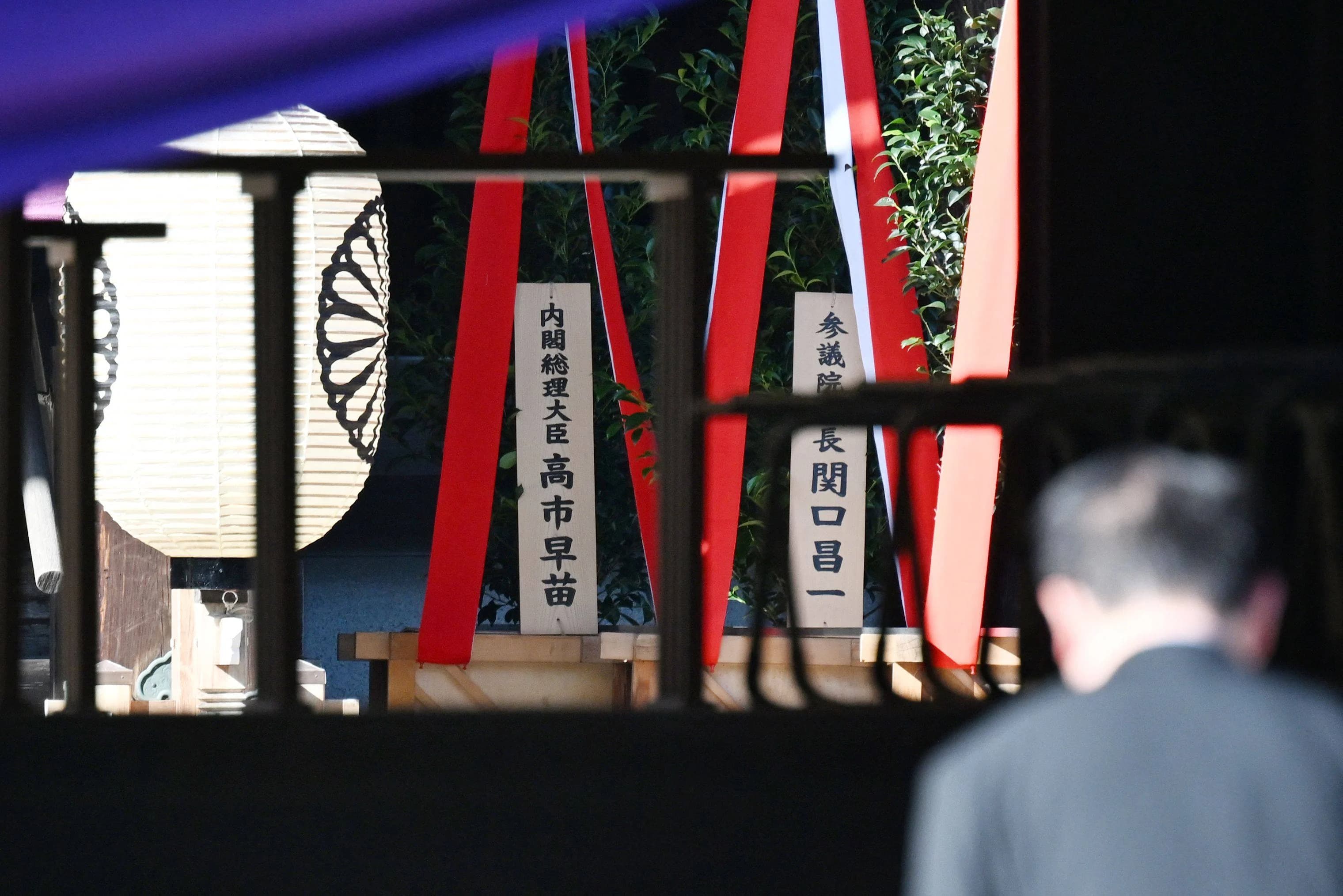
日本首相高市早苗在10月17日靖国神社秋季例行大祭揭幕时,以首相名义送去名为“真榊”的盆栽祭品,但选择不亲自前往参拜。共同社报道称,主管经济增长战略的阁僚木内实同日亲自参拜了该神社。媒体预计高市在截至周一的为期三天秋祭期间均不会到访现场。
Japanese Prime Minister Sanae Takaichi initiated her formal gesture at Tokyo's Yasukuni Shrine on Saturday by sending a ritual tree-stand offering dedicated in her official capacity as prime minister, while foregoing an in-person attendance at the opening of the three-day autumn festival. Japan's Kyodo News reported that Minoru Kiuchi, the cabinet minister in charge of economic growth strategy, visited the controversial site in person on the same day. Press reports indicate that Takaichi is expected to stay away from visiting the Shinto shrine directly throughout the festival period, which runs through Monday.
中国驻日本大使馆在周六晚间发表声明,对日方的消极动向表示强烈谴责,明确指出该行为是对二战后国际秩序的挑衅。使馆在通报中强调,靖国神社是日本军国主义发动对外侵略战争的精神工具与代表象征,日本政客无论以何种说辞向其表达敬意,本质上都是在为昔日战争罪行开脱,并试图以此加速推进国家再军事化进程。
In response, the Chinese Embassy in Japan issued a statement late Saturday strongly condemning what it designated as negative moves concerning the site, calling the actions a direct provocation against the post-World War II international order. The diplomatic mission underscored that Yasukuni served as a spiritual tool and symbol of militarist wartime aggression, asserting that homage paid by political figures under any rationale amounts to an attempt to whitewash war crimes while laying groundwork to accelerate the nation's remilitarisation.
02靖国神社的历史争议与政治平衡术Yasukuni's Historical Context and the Prime Ministerial Balancing Act
靖国神社供奉着约246万名日本战亡人员,其中包括二战后经国际审判认定的14名甲级战犯。由于这段历史事实,二战期间遭受日本军事侵略的亚洲邻国,尤其是中国和韩国,长期以来持续抗议日本领导人前往该神社参拜或供奉祭品。
Tokyo's Yasukuni Shrine honours approximately 2.46 million Japanese war dead, a total that includes 14 Class-A war criminals convicted by international tribunals in the aftermath of World War II. Because of this commemoration of convicted wartime leaders, Asian nations that suffered under Japanese military aggression during the war, particularly China and South Korea, have consistently registered diplomatic protests against both personal visits and ritual offerings conducted by Japanese national leaders.
北京对外经济贸易大学日本问题研究学者吴英杰分析指出,高市早苗的做法延续了多位日本前首相的政治平衡策略,即通过放弃亲自参拜来规避强烈的国际反对,同时借由供奉祭品满足国内右翼保守盟友的政治期待。这种举措在试图兼顾不同阵营诉求的同时,也使得该历史场所反复成为邻国外交争端的焦点。
Wu Yingjie, a Japanese studies research fellow at the University of International Business and Economics in Beijing, observed that Takaichi is maintaining an established dual-track posture adopted by several of her political predecessors. Wu explained that this approach reflects a balancing act intended to avert harsh international backlash through abstaining from personal visits, while simultaneously providing ritual offerings to satisfy domestic right-wing allies, keeping the controversial memorial at the centre of recurrent bilateral friction.
03内阁参拜历史与北京的外交定性升级Cabinet Visit Precedents and Beijing's Rhetorical Posture
学者吴英杰指出,北京此次的谴责与其既定外交立场一致,并呼应了其在8月份的批评,当时中方指责日本挑战二战后的国际秩序。在8月15日日本二战投降纪念日,高市早苗同样选择不亲自前往参拜,转而供奉了祭品,但防卫大臣小泉进次郎以及另外三名内阁成员当时亲自参拜了该神社。针对当时的参拜与供奉举动,中国外交部明确将靖国神社定性为“战犯神社”。
Beijing-based scholar Wu Yingjie observed that China's latest condemnation aligns with its established diplomatic posture and echoes criticisms voiced in August, when Beijing accused Japan of challenging the post-World War II international order. On August 15, the anniversary of Japan's surrender in World War II, Prime Minister Sanae Takaichi similarly skipped a personal visit and sent an offering instead, while Defence Minister Shinjiro Koizumi and three other cabinet ministers visited the shrine in person. In direct response to those August offerings and visits, China's foreign ministry explicitly branded Yasukuni a war criminal shrine.
中国外交部发言人毛宁在周四回应日本广播协会(NHK)披露的新纪录片时,再次将该场所描述为“实际上的战犯神社”。这部日本公共广播机构播放的纪录片详细披露了靖国神社在20世纪60年代秘密决定合祀甲级战犯的历史过程。北京方面结合这一媒体披露,在外交表态中延续并强化了对该神社性质的定性指责。
On Thursday, Chinese foreign ministry spokeswoman Mao Ning again described the memorial as a de facto war criminal shrine while addressing a new documentary broadcast by Japanese public network NHK. The documentary disclosed historical details concerning the covert 1960s decision to enshrine Class-A war criminals at the site. Drawing on these historical revelations, the ministry sustained its sharp rhetorical characterisation of the site, reaffirming its formal diplomatic posture ahead of the autumn festival.
中日靖国神社与涉台争议演进Timeline of Sino-Japanese Friction Over Yasukuni and Taiwan
梳理高市早苗涉台争议表态、战败日及秋祭涉靖国神社举措与中方接连交涉谴责的脉络。
Traces the escalation in Sino-Japanese tensions spanning Takaichi's Taiwan remarks, ritual offerings to Yasukuni Shrine, and China's diplomatic condemnations.
高市早苗在国会表示台湾若遭军事攻击可能构成日本的“存亡危机事态”,引发北京不满,中日高层政府对话自此基本停滞。
Takaichi suggested in parliament that a military conflict involving Taiwan could threaten Japan's survival, largely halting high-level government dialogues.
日本战败投降日当天,高市早苗回避参拜但向靖国神社供奉祭品,防卫大臣小泉进次郎等4位内阁大臣参拜,中国外交部将靖国神社定性为战犯神社。
Marking Japan's WWII surrender, Takaichi skipped visiting but sent an offering while Defence Minister Koizumi and three ministers visited, drawing Beijing's condemnation.
针对日本NHK纪录片披露1960年代秘密合祀二战甲级战犯的细节,中国外交部发言人毛宁再次将靖国神社定性为实质上的战犯神社。
Addressing an NHK documentary disclosing the covert 1960s enshrinement of Class-A war criminals, China's foreign ministry reaffirmed Yasukuni is a war criminal shrine.
高市早苗表示,若获得日本国会批准,其计划于11月前往中国深圳参加亚太经合组织峰会,但双边首脑会晤前景因双边分歧仍存不确定性。
Takaichi expressed her intention to travel to Shenzhen for next month's APEC summit if cleared by parliament, amid uncertainty over potential bilateral meetings.
高市以首相名义向靖国神社秋季大祭供奉祭品,阁僚城内实参拜;中国驻日使馆强烈谴责此举挑衅战后秩序,企图为军国主义翻案。
Takaichi sent a ritual offering as economic strategy minister Kiuchi visited in person; the Chinese Embassy strongly condemned the homage as whitewashing war crimes.
04台湾议题摩擦与APEC双边会晤前景Taiwan Tensions and Uncertain Bilateral Outlook Ahead of APEC
中日外交关系的降温始于去年11月,当时高市早苗在国会提出,台湾遭受军事攻击可能构成日本的“存亡危机事态”,并可能成为日本采取军事介入的理由。北京将台湾视为其领土的一部分,且不排除在必要时使用武力实现统一。包括美国和日本在内的大多数国家并不承认台湾为主权独立国家,但华盛顿反对任何以武力改变现状的企图,并维持向台湾供应武器的承诺。自高市发表该涉台论调以来,两国政府间的高层对话基本处于停滞状态。
The ongoing diplomatic chill between China and Japan deepened after November of last year, when Prime Minister Sanae Takaichi suggested during parliamentary sessions that a military attack on Taiwan could constitute a survival-threatening situation for Japan, potentially justifying military intervention by Tokyo. Beijing views Taiwan as part of China to be reunified by force if necessary. Although most nations, including both Japan and the United States, do not officially recognise Taiwan as an independent state, Washington consistently opposes any attempt to seize the island by force and remains committed to providing it with defensive weaponry. High-level bilateral dialogues between Tokyo and Beijing have largely ground to a halt following Takaichi's remarks.
高市早苗周五表示,在获得国会批准的前提下,她打算下个月前往中国参加在深圳举行的亚太经合组织(APEC)峰会。然而,学者吴英杰指出,除非东京方面在涉及台湾问题的公开表态上作出根本性改变,否则双方在峰会期间举行正式双边高层会晤的可能性依然极低。
On Friday, Takaichi expressed her intention to travel to China next month to participate in the Asia-Pacific Economic Cooperation summit scheduled in Shenzhen, provided she receives necessary clearance from parliament. Nevertheless, Beijing-based researcher Wu Yingjie cautioned that a formal bilateral meeting between national leaders remains unlikely to materialise on the sidelines of the summit without a fundamental shift in Tokyo's official rhetoric regarding Taiwan.